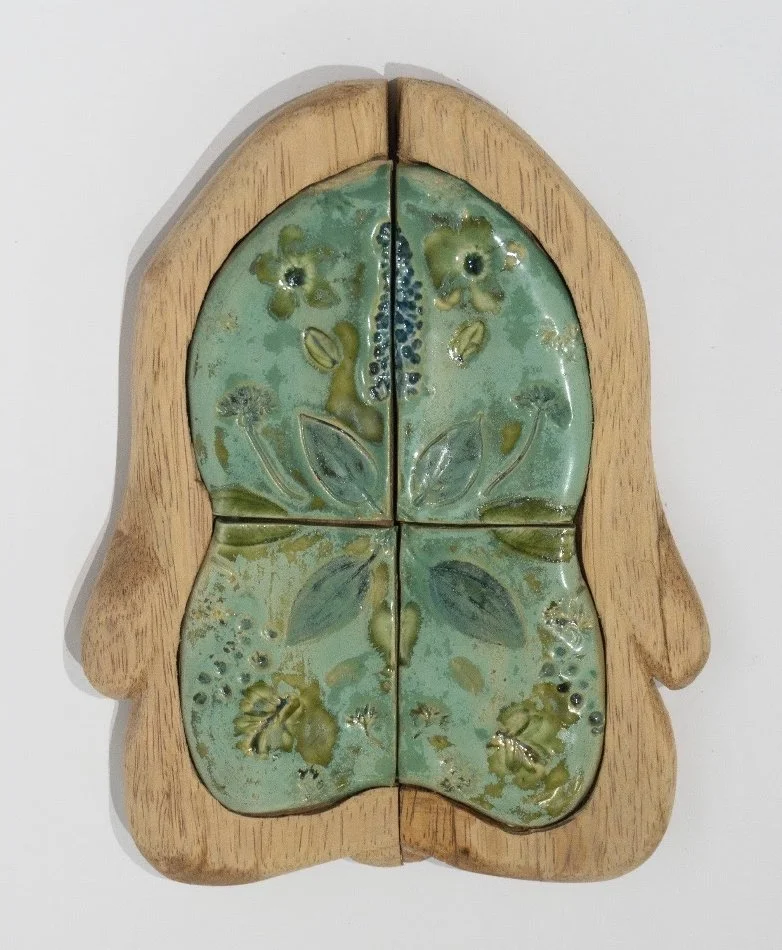
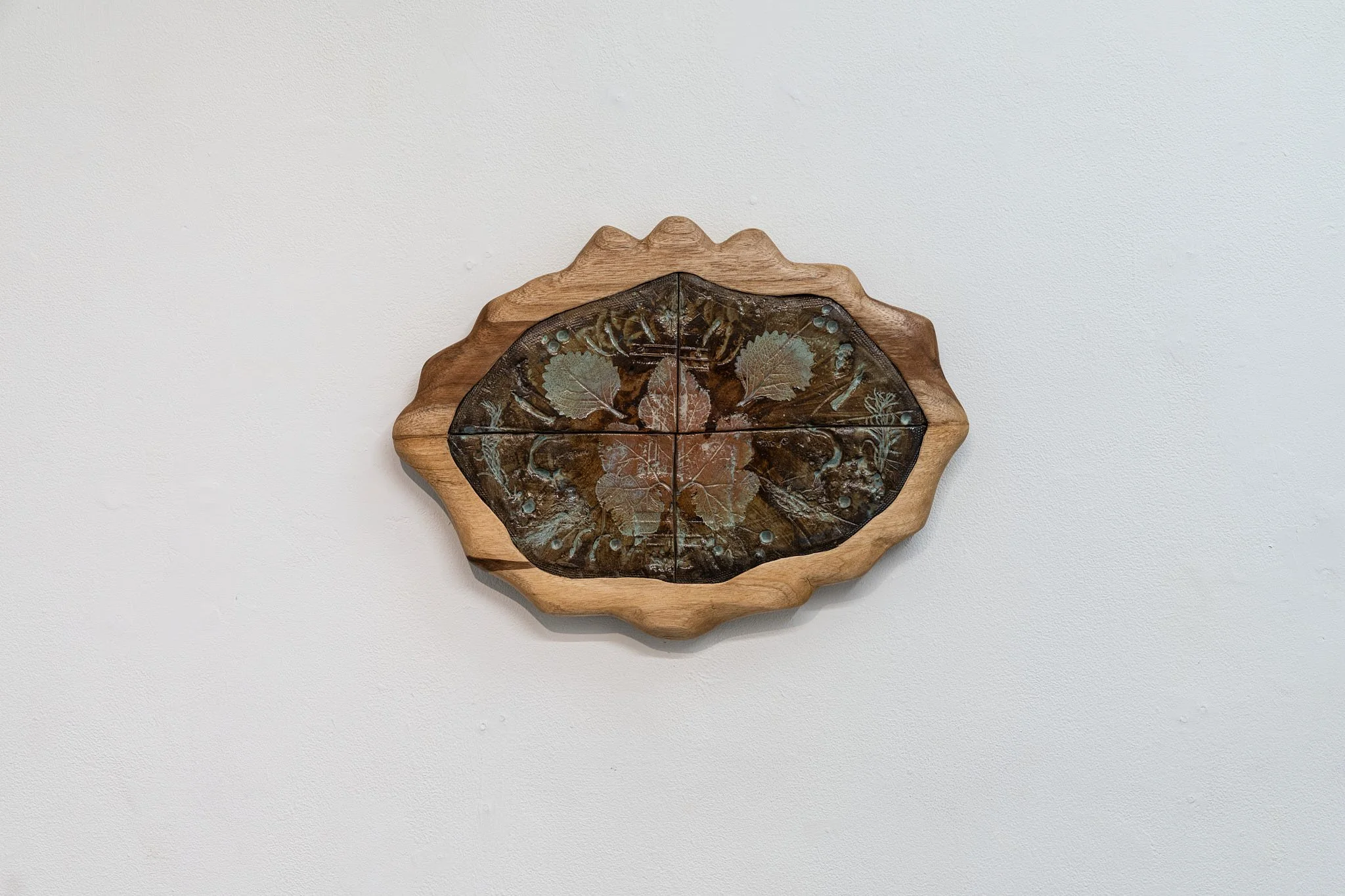
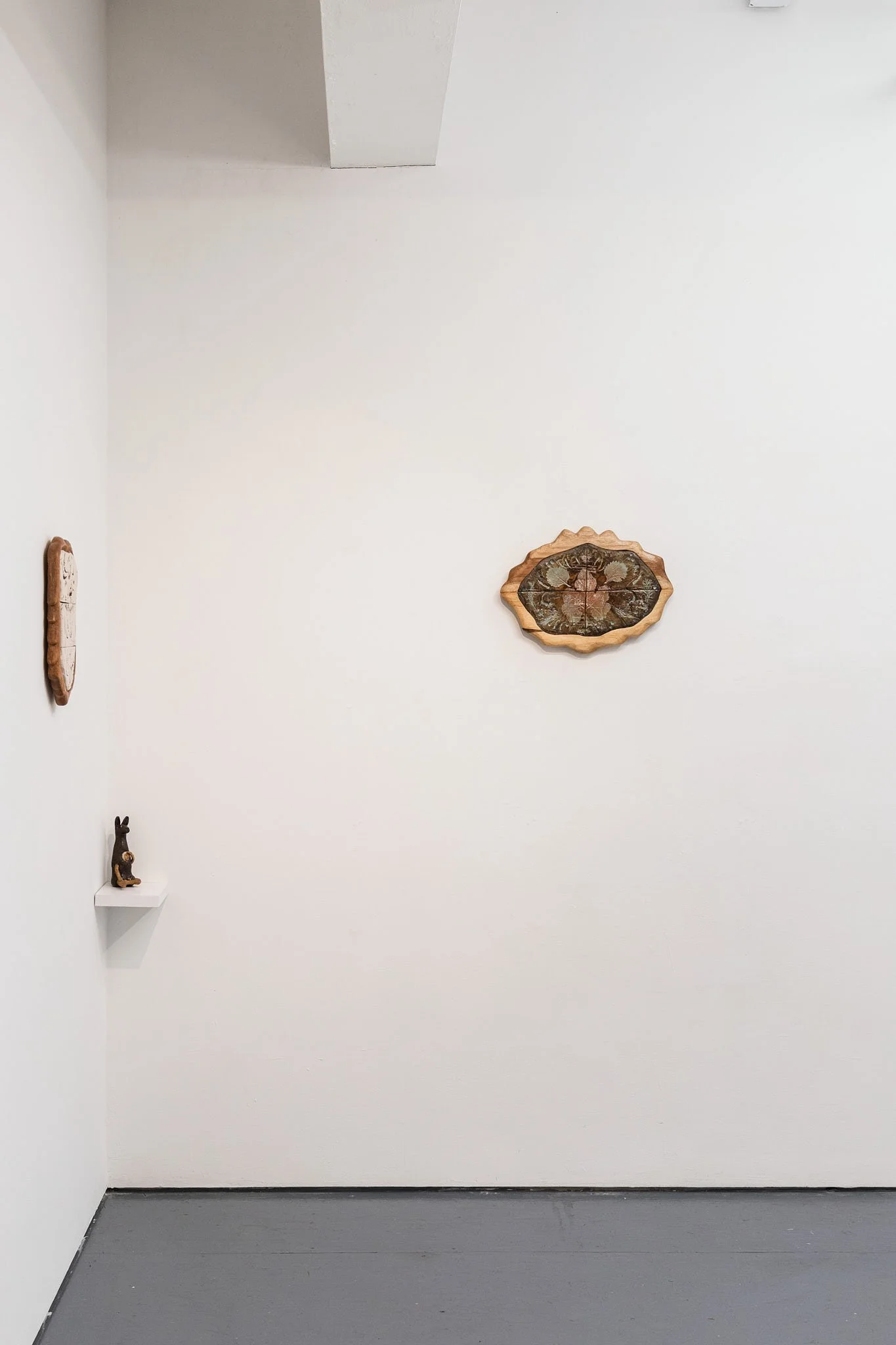
Inventario Cascada, 2026. Ceramics and Seique Wood
NEW YORK
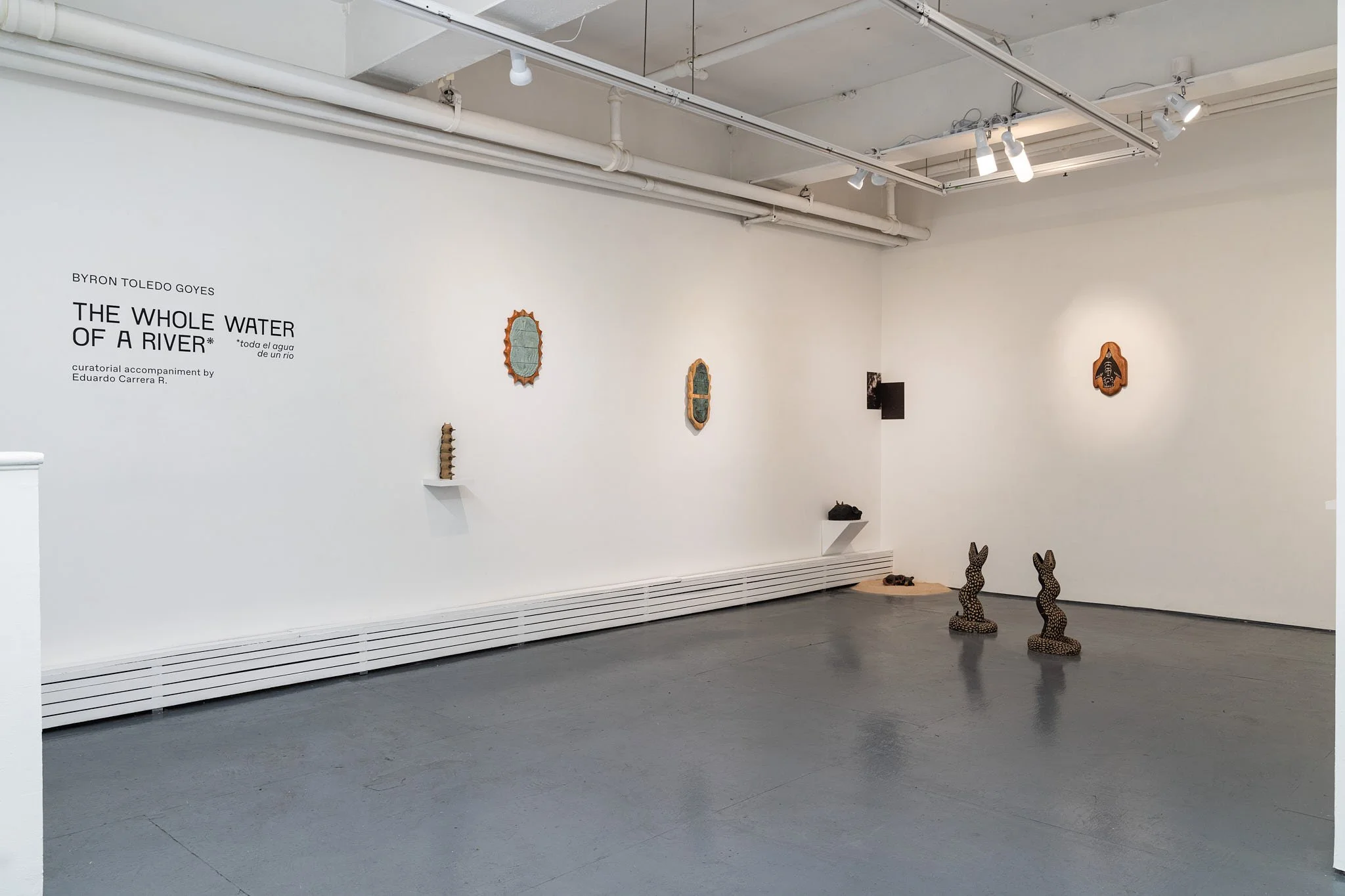
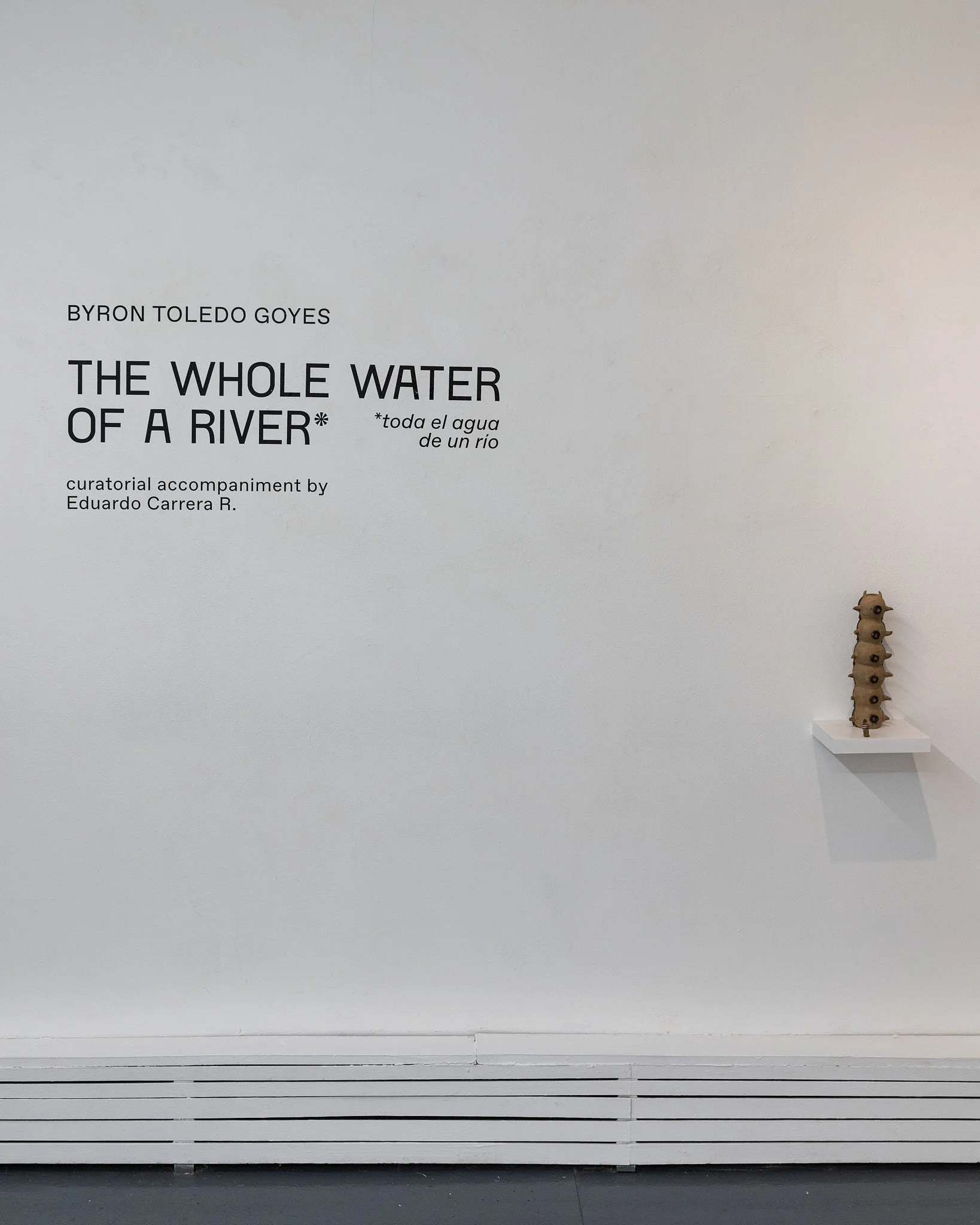
BYRON TOLEDO: The Whole Water of a River
Curated by Eduardo Carrera R
Jun 6 – Jul 12
Opening Reception: Sat, Jun 6, 6-8 pm
The exhibition takes the Machángara River as its point of departure. Flowing through Quito, the artist’s birthplace, it is no longer understood as a static natural entity but instead emerges as a body in constant transformation, shaped by processes of extraction, waste, and regeneration. As is the case with many rivers in metropolitan areas, its waters begin clean and become gradually contaminated as they absorb the residues and excess materials of the built environment. Within this framework, Byron Toledo traces its basin, attending to both the forms of life it sustains and the social and environmental contradictions it reveals.
In this landscape, the dynamics of the urban and the rural intersect to produce stratified narratives marked by tensions between ecological and social processes. The riverbed emerges both as a symptom of these dynamics and as a space of persistence, sustaining a complex network of human and more-than-human life. Water circulates among plants, rocks, and ravines, moving between surface flows and subterranean currents as it traverses the fractures of the territory.
In Ecuador, where the 2008 Constitution recognizes nature as a subject of rights, the Machángara has acquired relevance within debates on ecology and environmental justice. In this context, it is no longer conceived solely as a hydrological resource or a landscape feature, but rather understood as an entity with intrinsic value, whose existence demands relations of care, repair, and coexistence. It thus becomes a political-ecological entity traversed by tensions between wildlife, pollution, and human intervention.
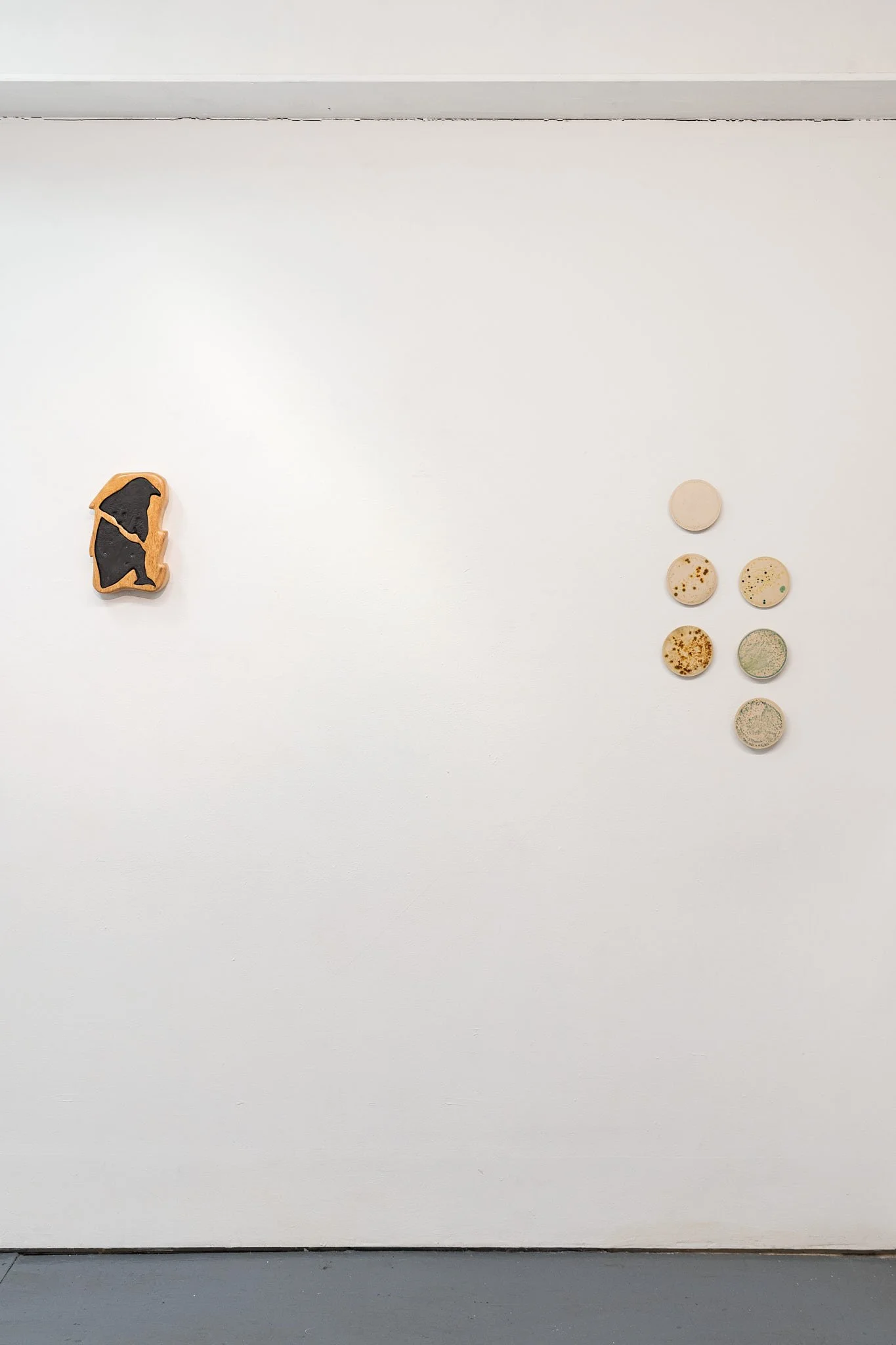
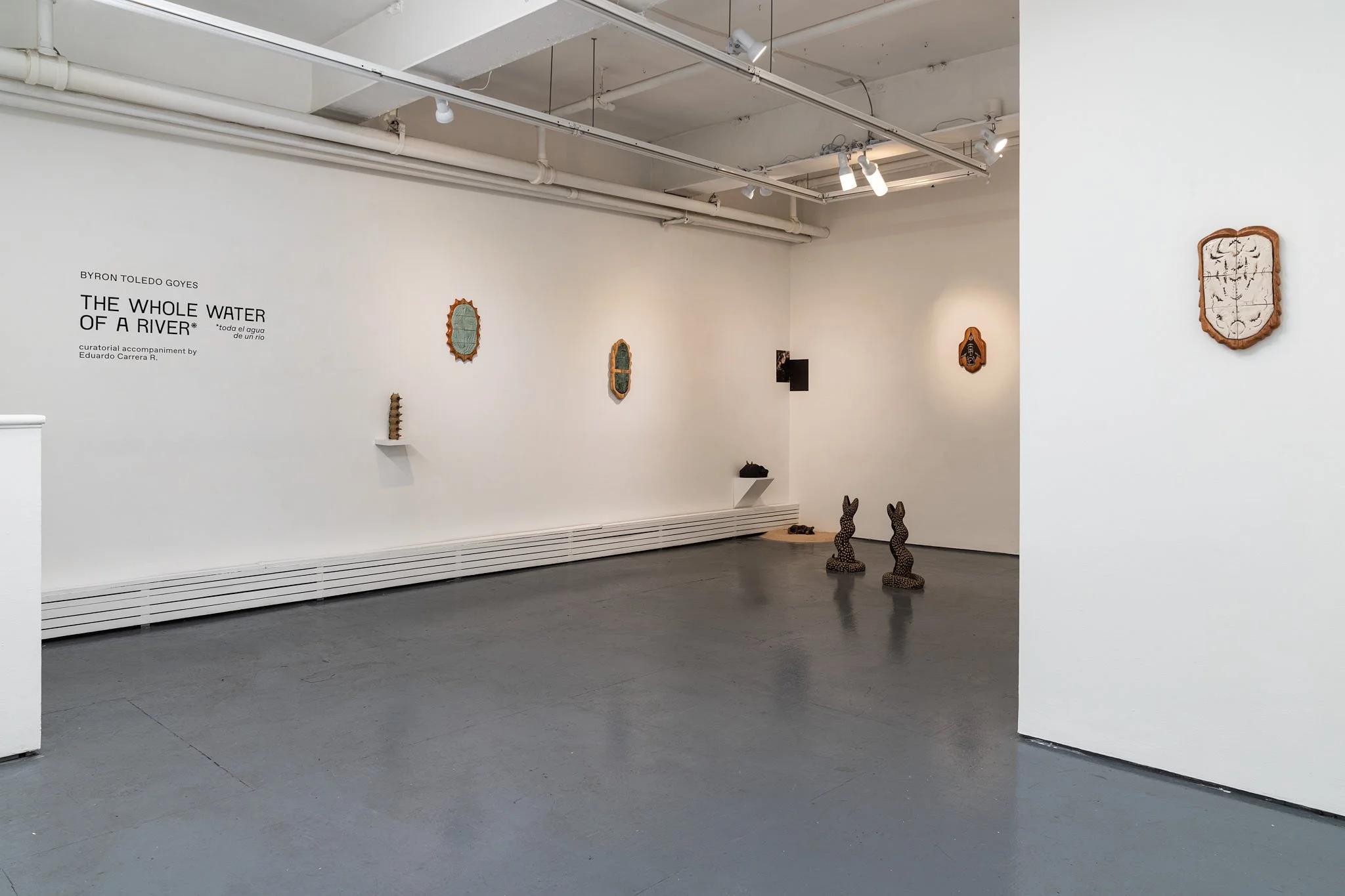
In the exhibition, the Machángara is approached as a living presence. Its sediments, sounds, odors, and textures are assembled into objects that evoke memory, knowledge, and alternative ways of inhabiting. Ceramics constitute the primary medium through which these sensory and ecological registers are translated and incorporated, inscribing traces of the fluvial system in sculptural form.
For Toledo, working from the river means entering into dialogue with its rhythms, residues, and fluctuations, so that the work is not produced solely in the studio but at the intersection of artistic practice and the river basin. In this displacement, the studio ceases to function as a closed site of creation, and practice expands into a field of relations shaped by atmospheric and sensory dynamics that exceed the artist’s control.
The relationship between clay and Ecuador and Latin America dates back to pre-colonial times, when it was linked to Indigenous knowledge systems, ritual practices, and forms of organizing everyday life. Far from being merely a utilitarian medium, it functioned as a technology of mediation between living beings, territories, and cosmologies, articulating sensorial relations with the environment through objects that condensed memory, use, and ritual.
This relational dimension extends into Toledo’s exhibition proposal, which expands the field of ceramics toward a transmedial condition. The object ceases to operate as a closed or finished form and instead becomes a sensorial and ecological device. By incorporating sound, smell, and organic matter, clay serves as an active support that releases its components into space. The exhibited works thus occupy a threshold between form and process, where material serves as an interface for constantly circulating environmental forces.
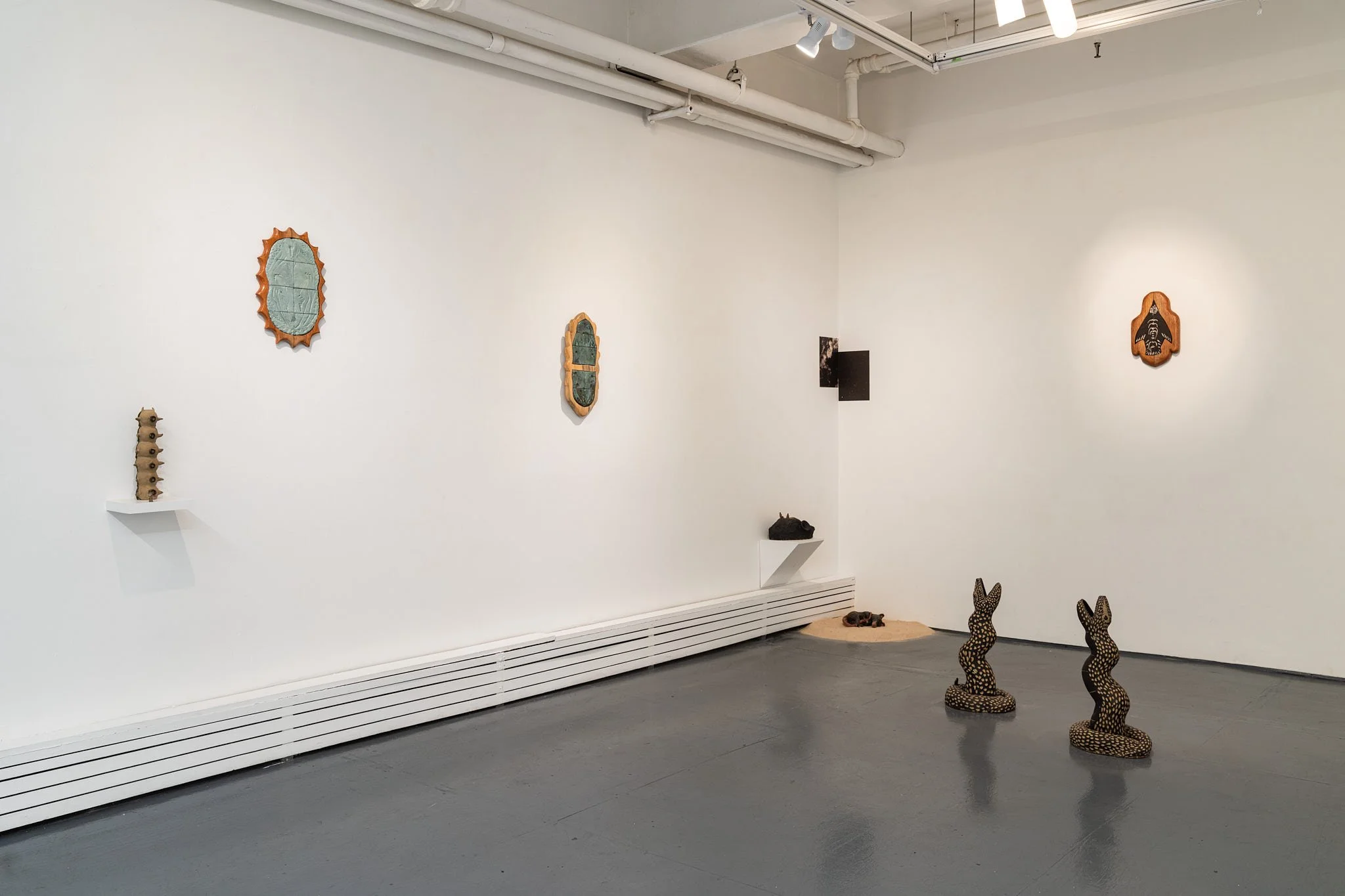
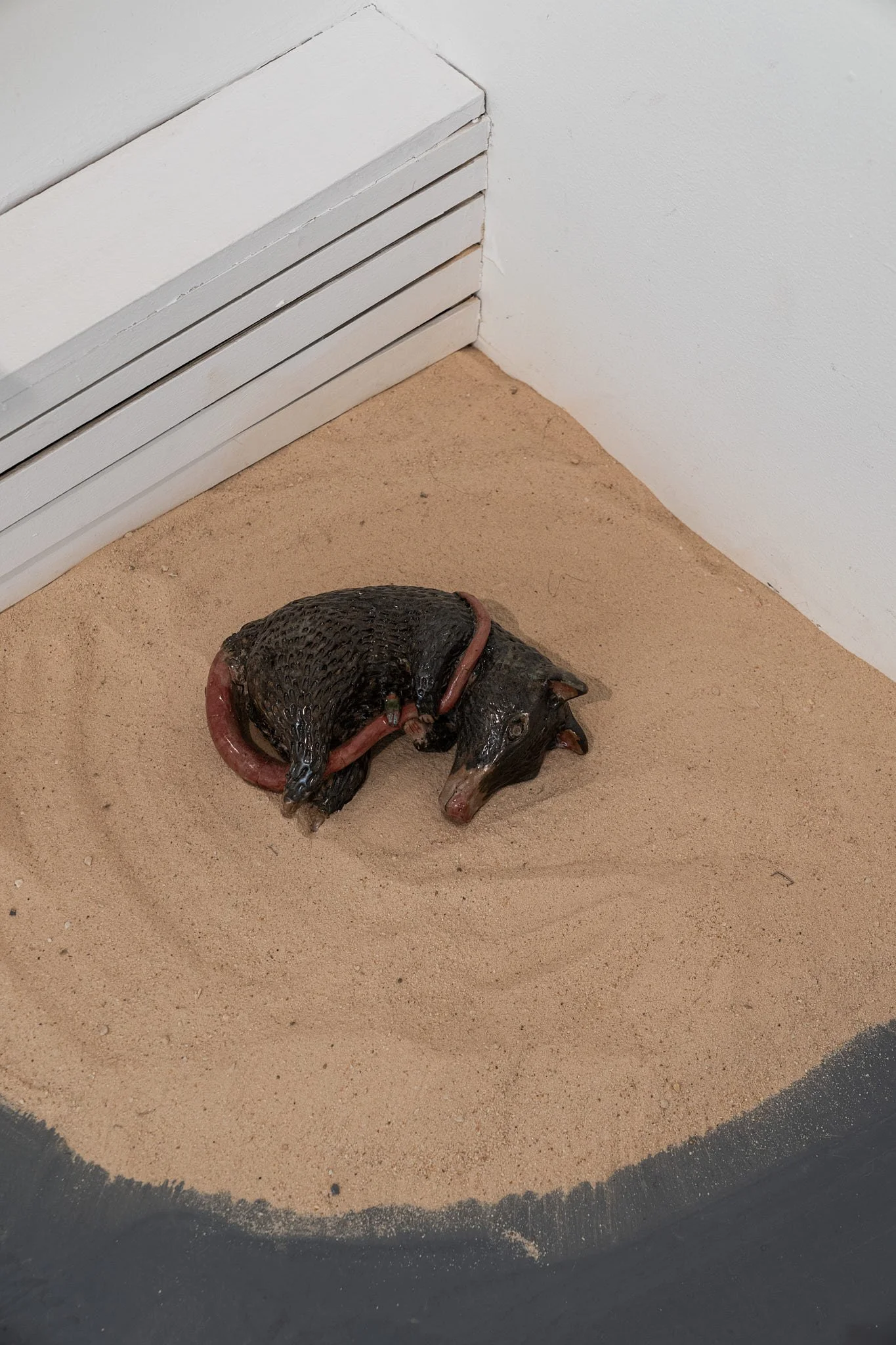
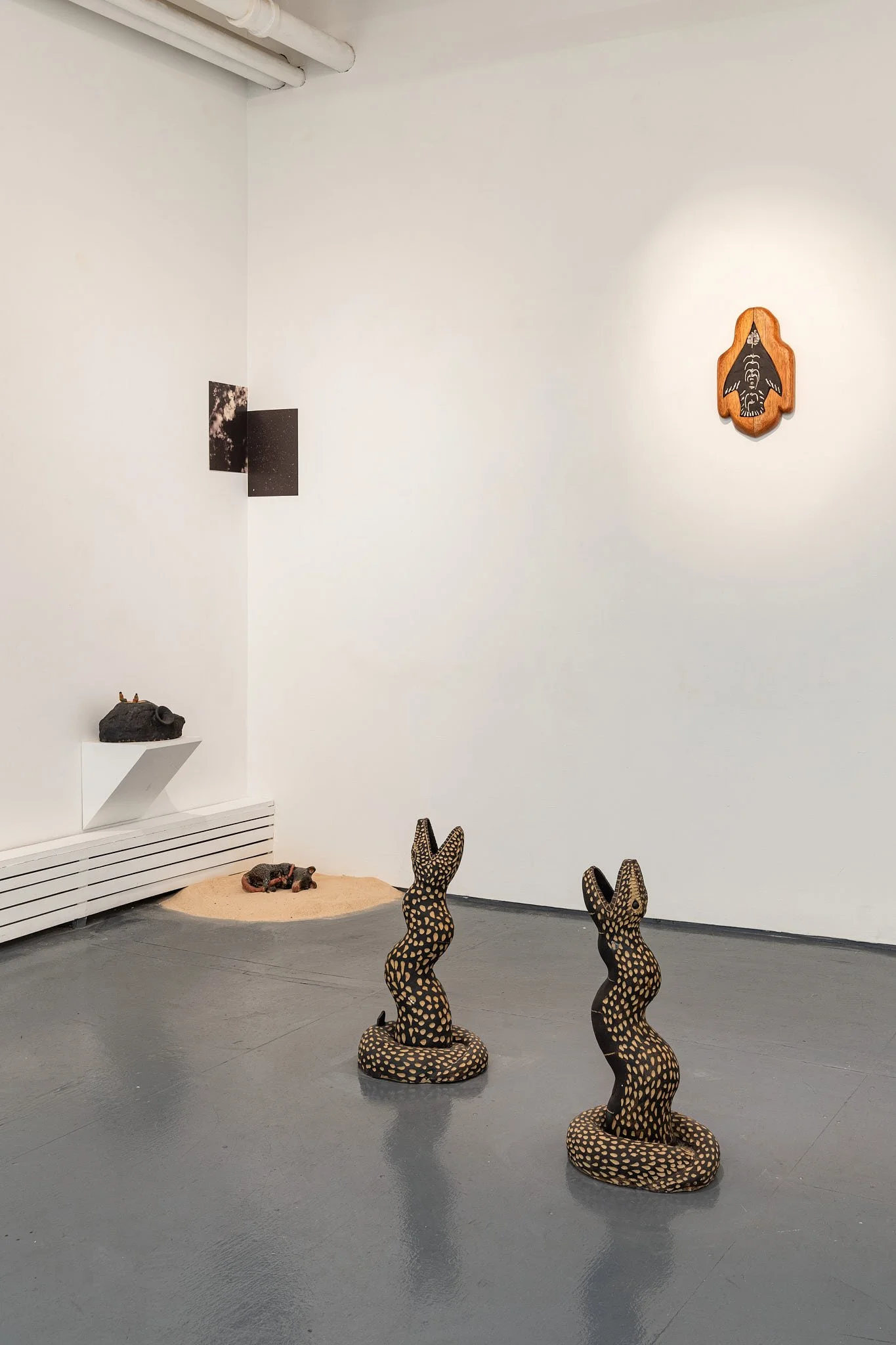
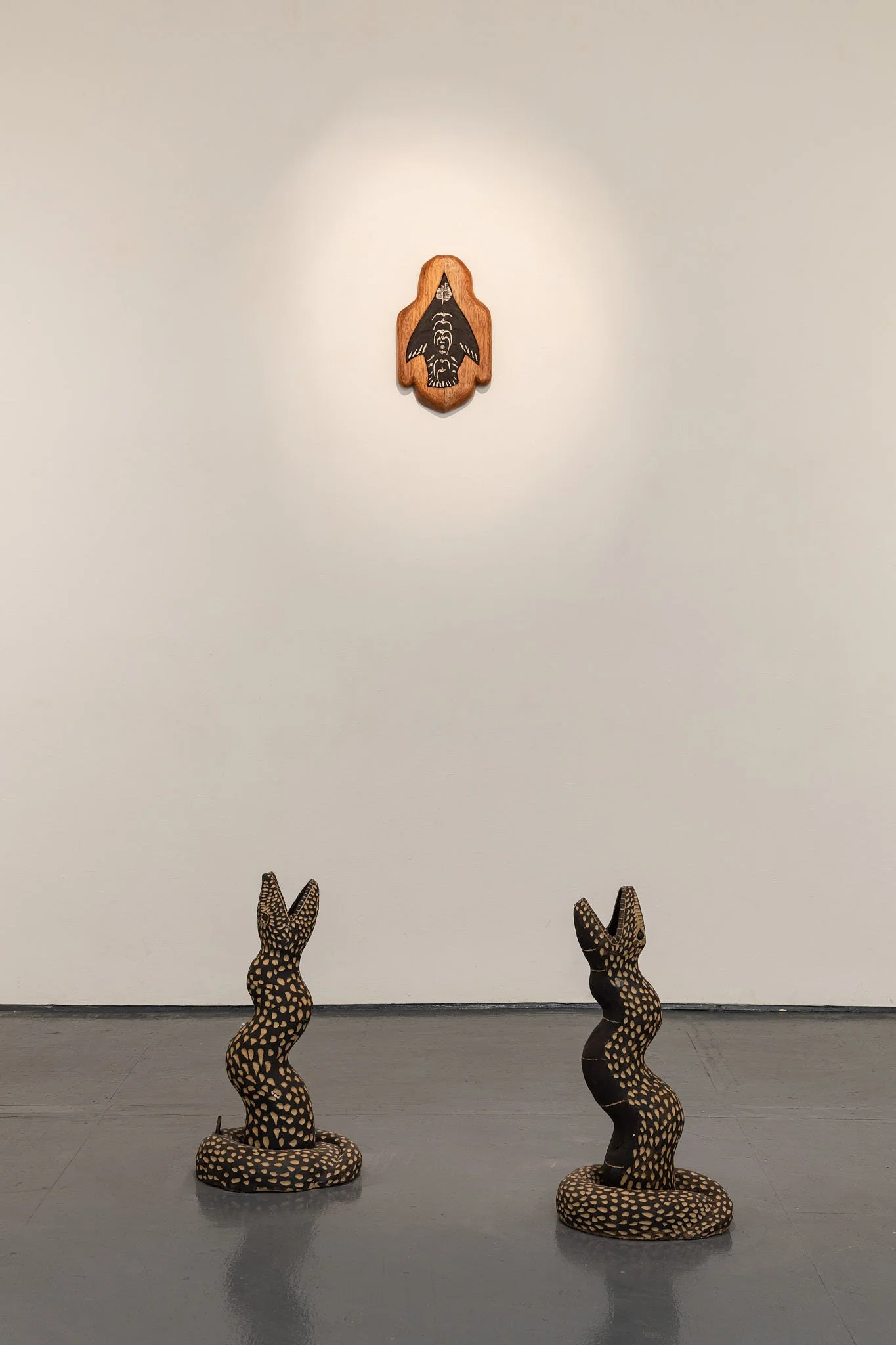
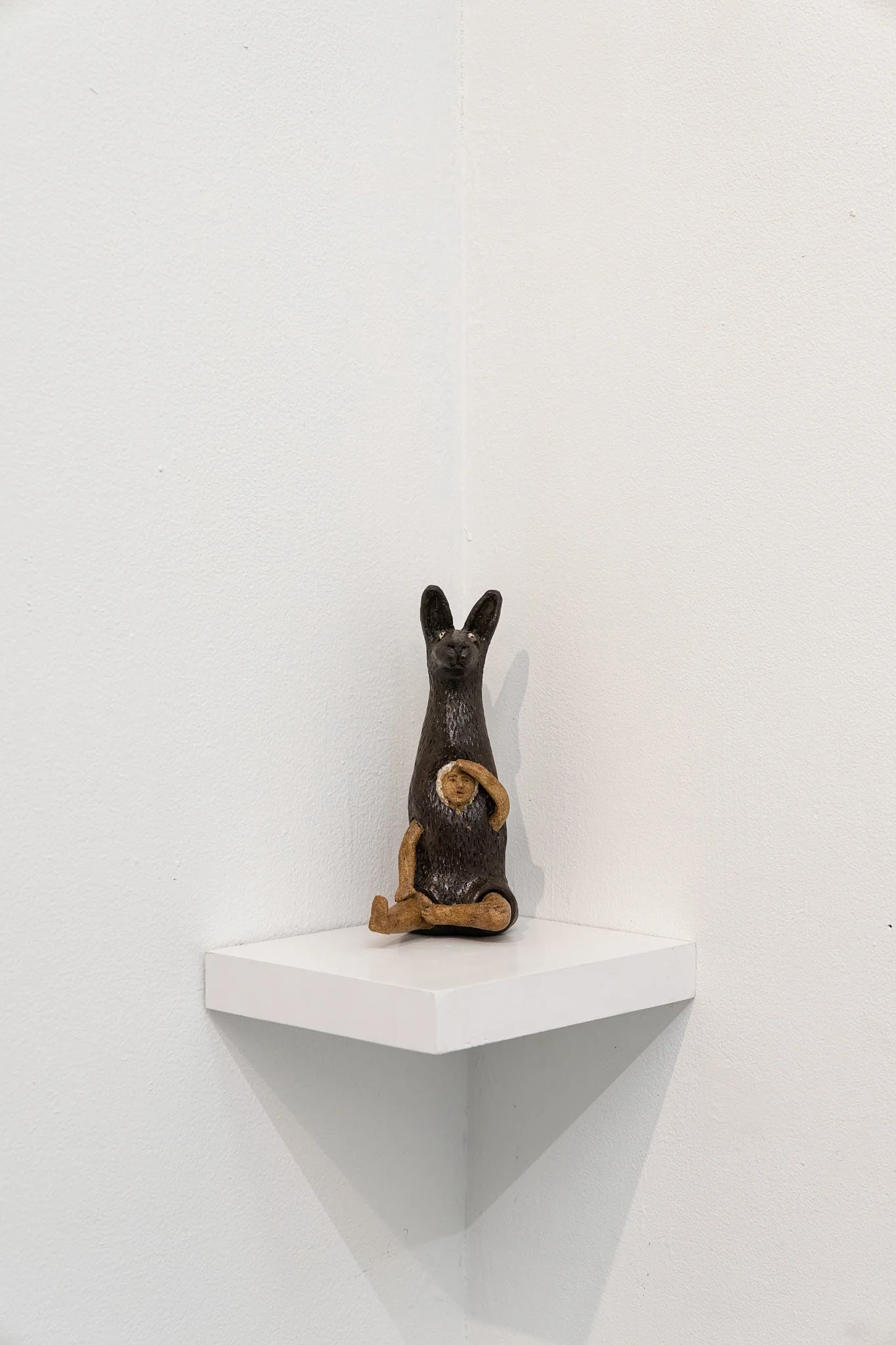
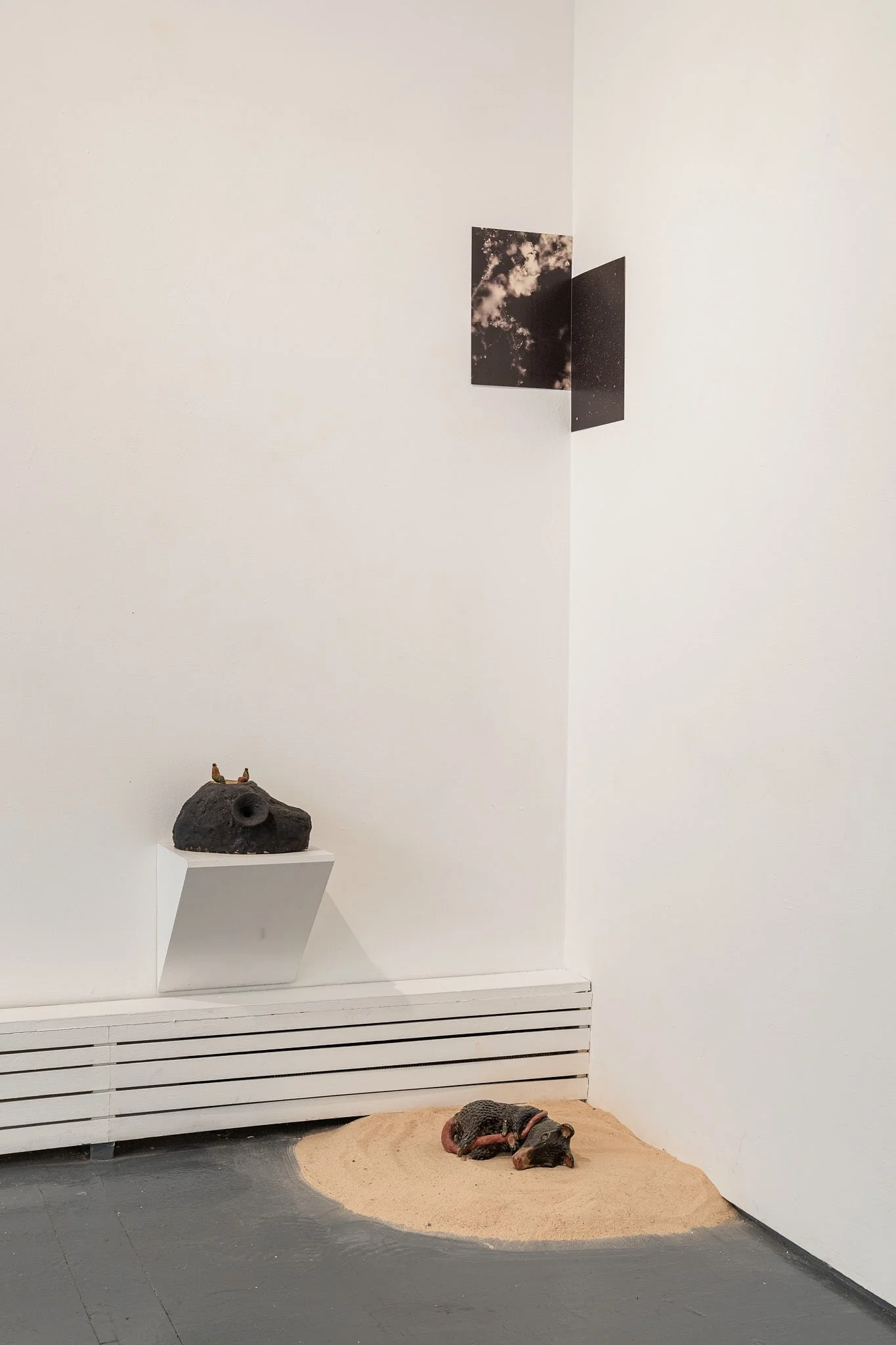
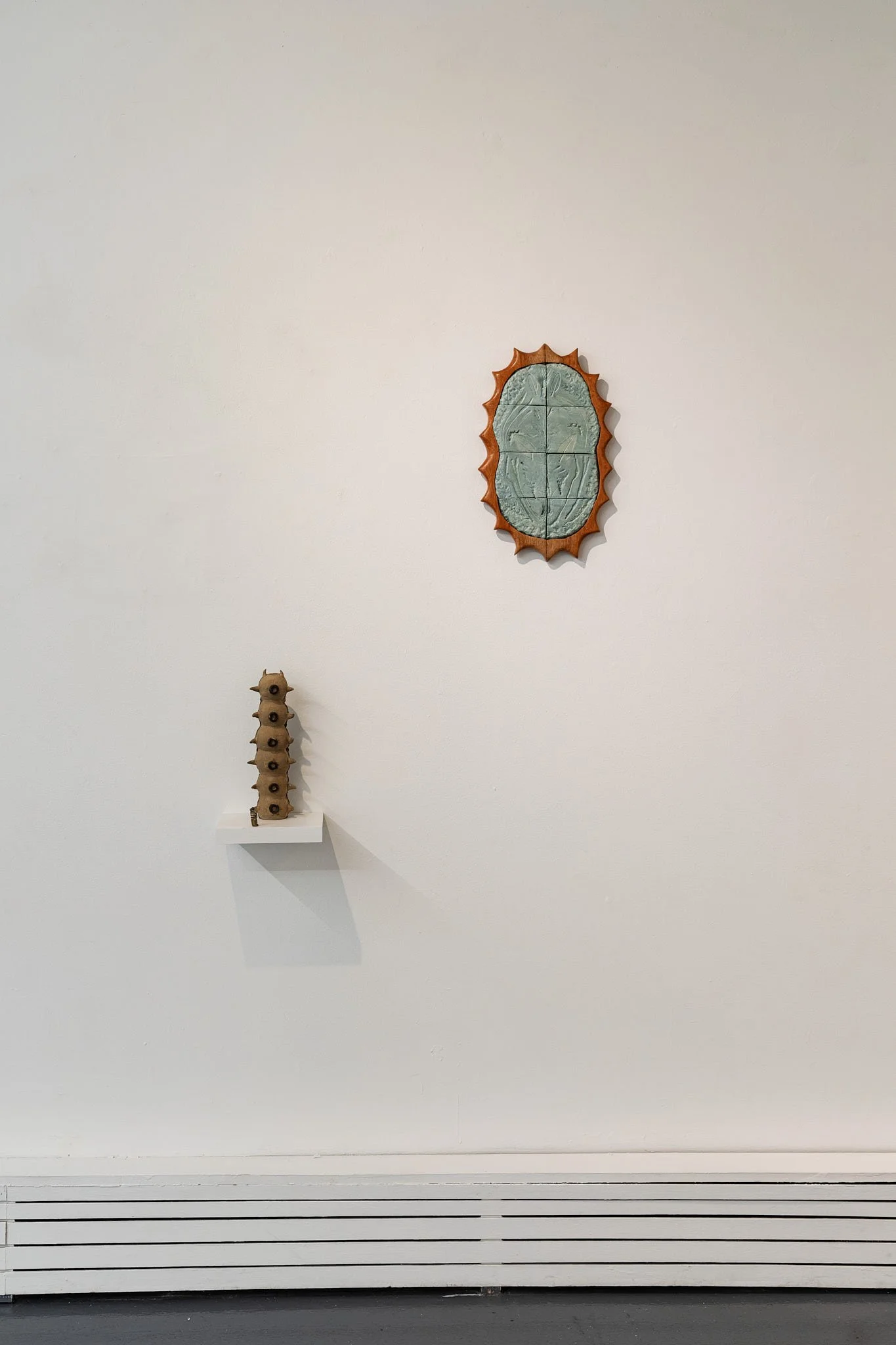
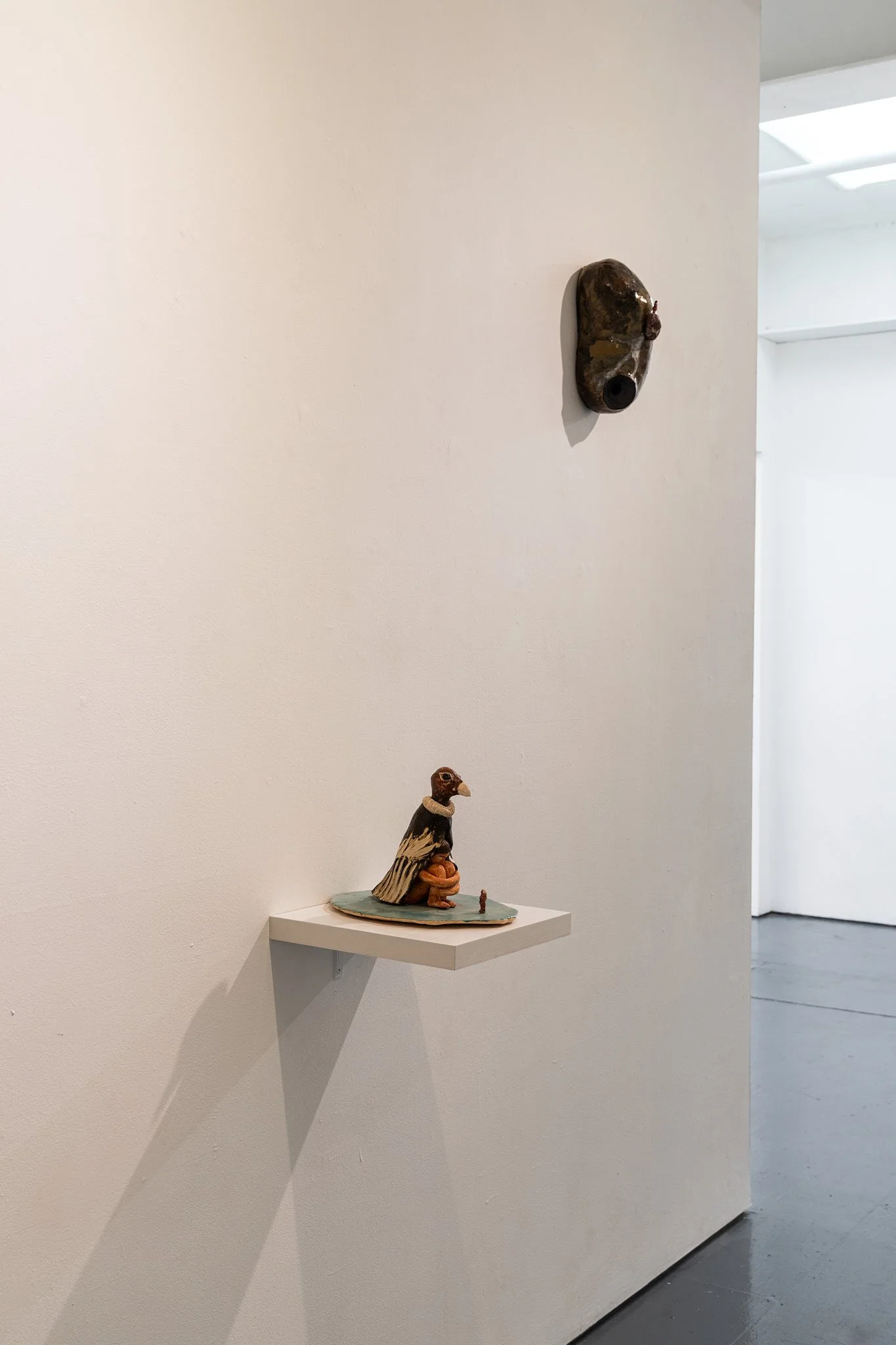
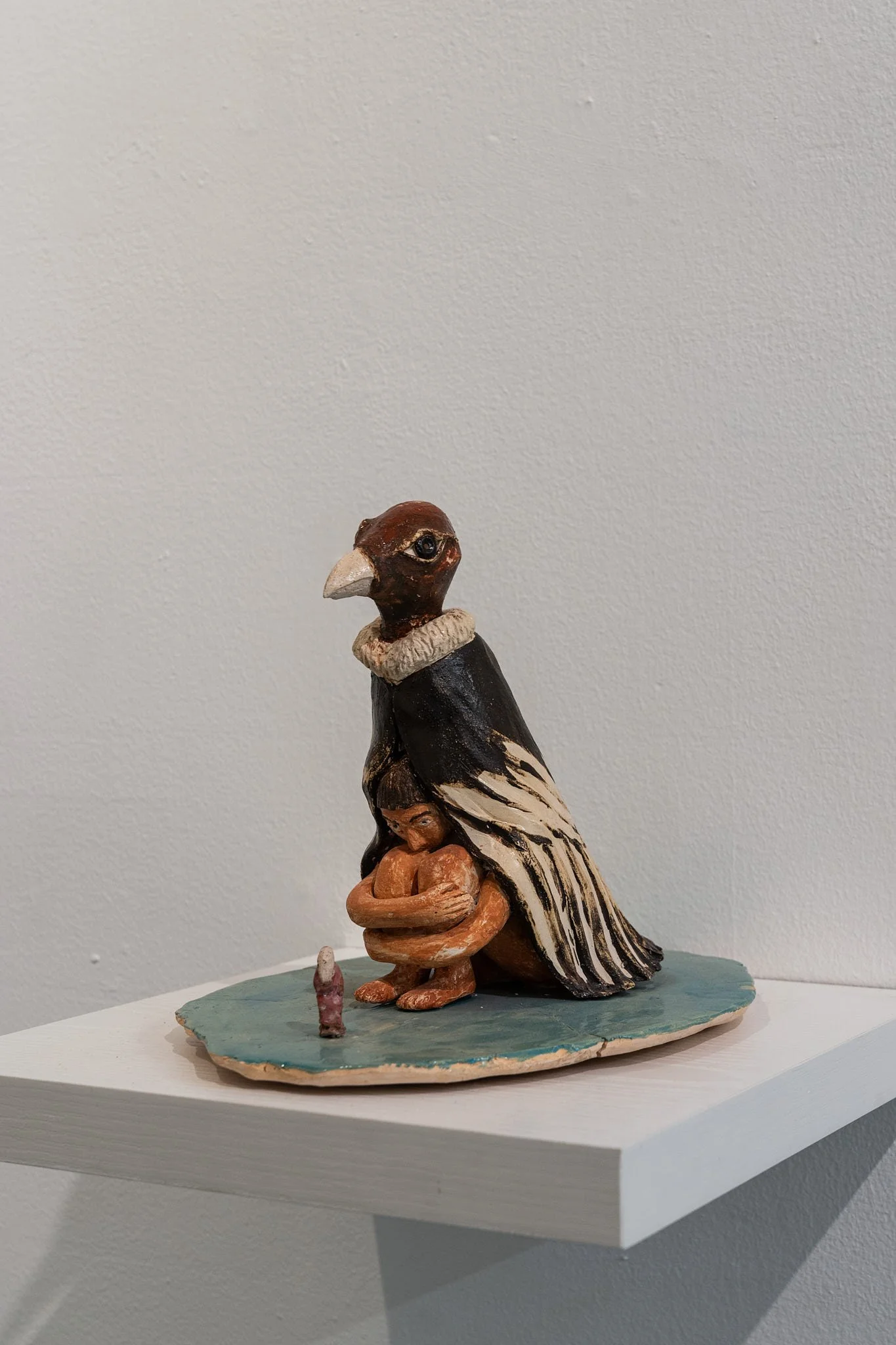
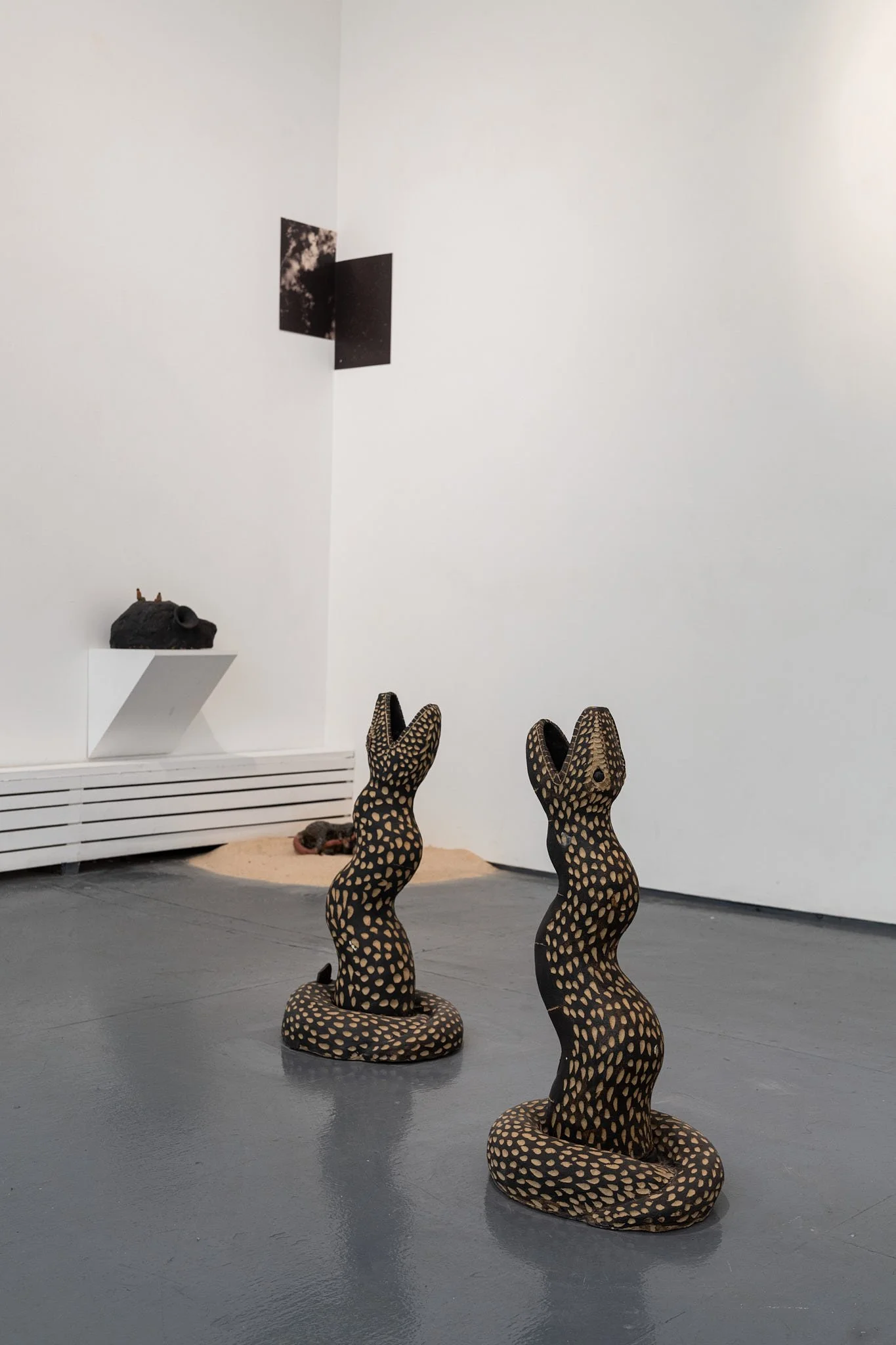
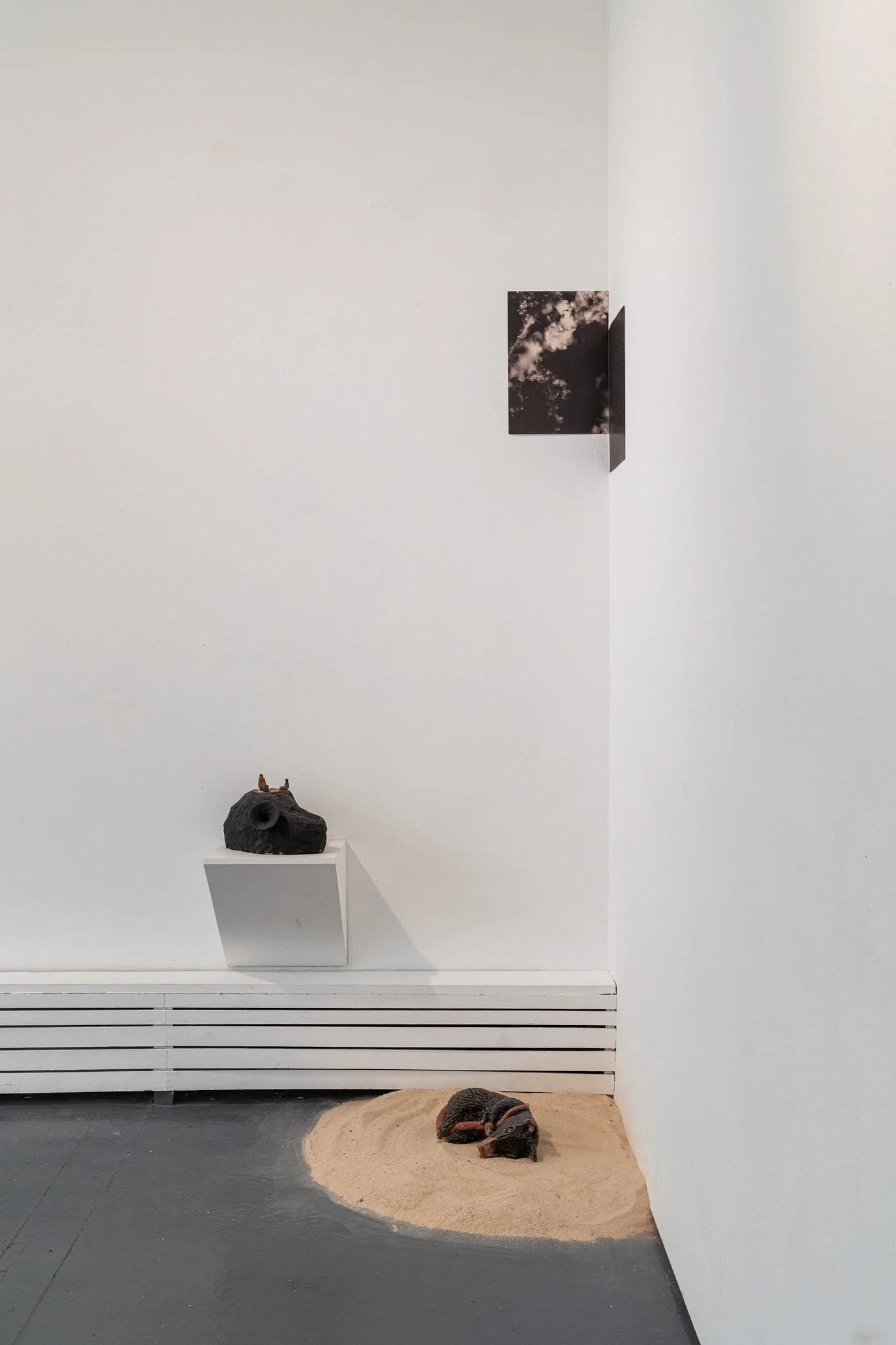
Zarihuella (2025) is a rodent inspired by a species native to Andean ecosystems. The piece is part of the series Animals of the Ravine, which translates the fauna of the Machángara into sculptural language. Many of these species—such as reptiles and birds—retain symbolic and spiritual value for local communities, even as they face increasing vulnerability due to habitat alteration.
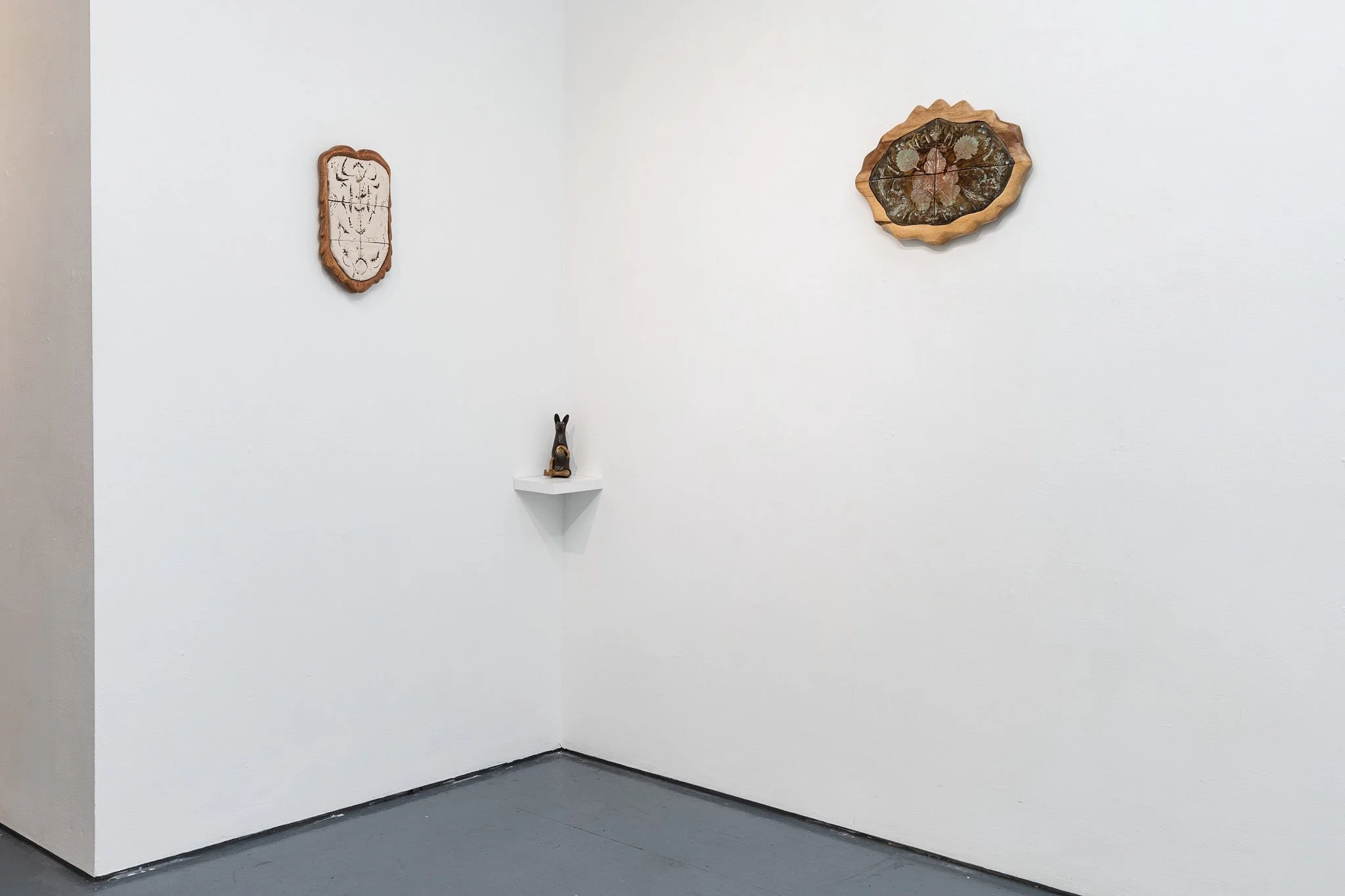
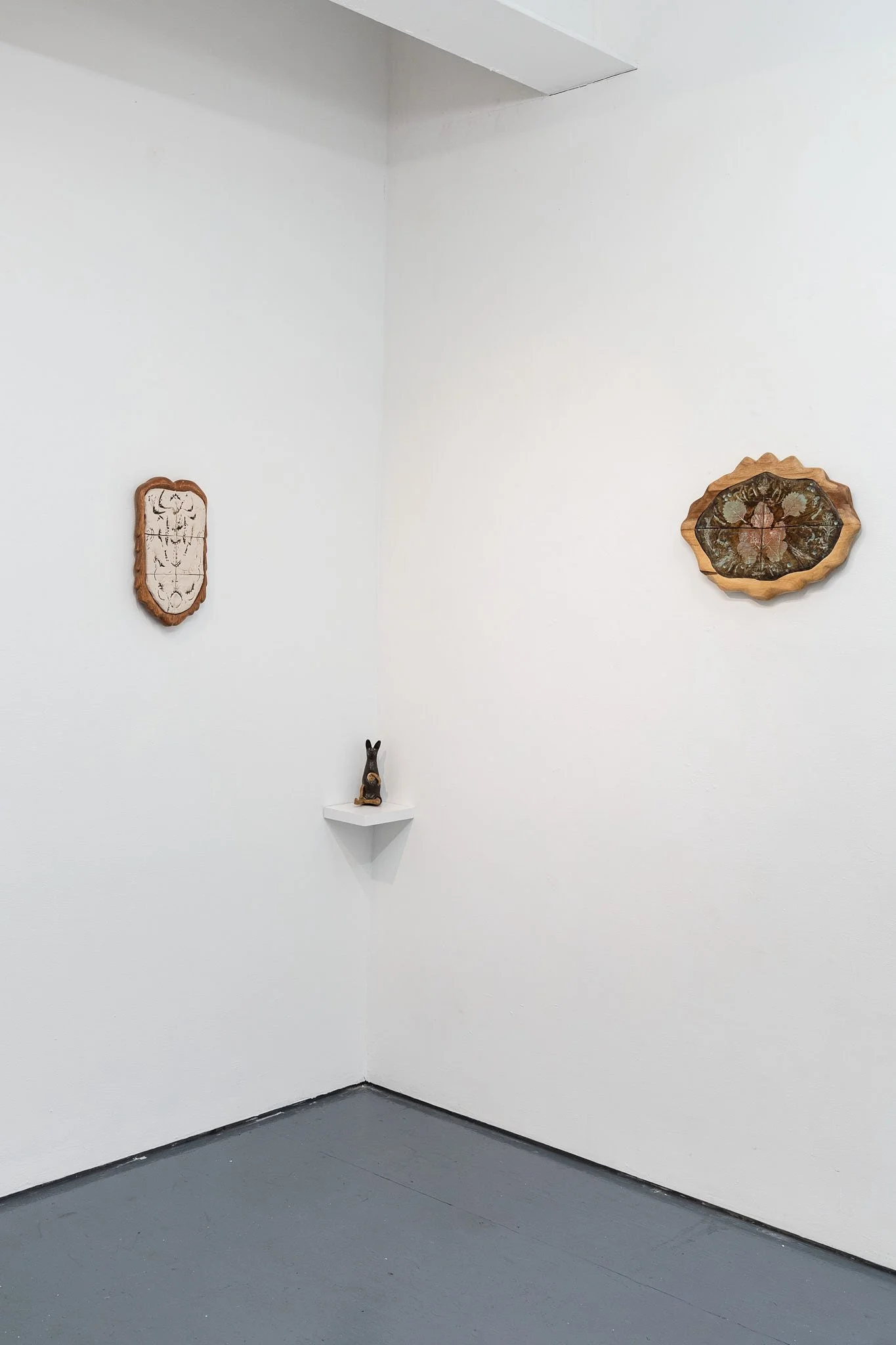
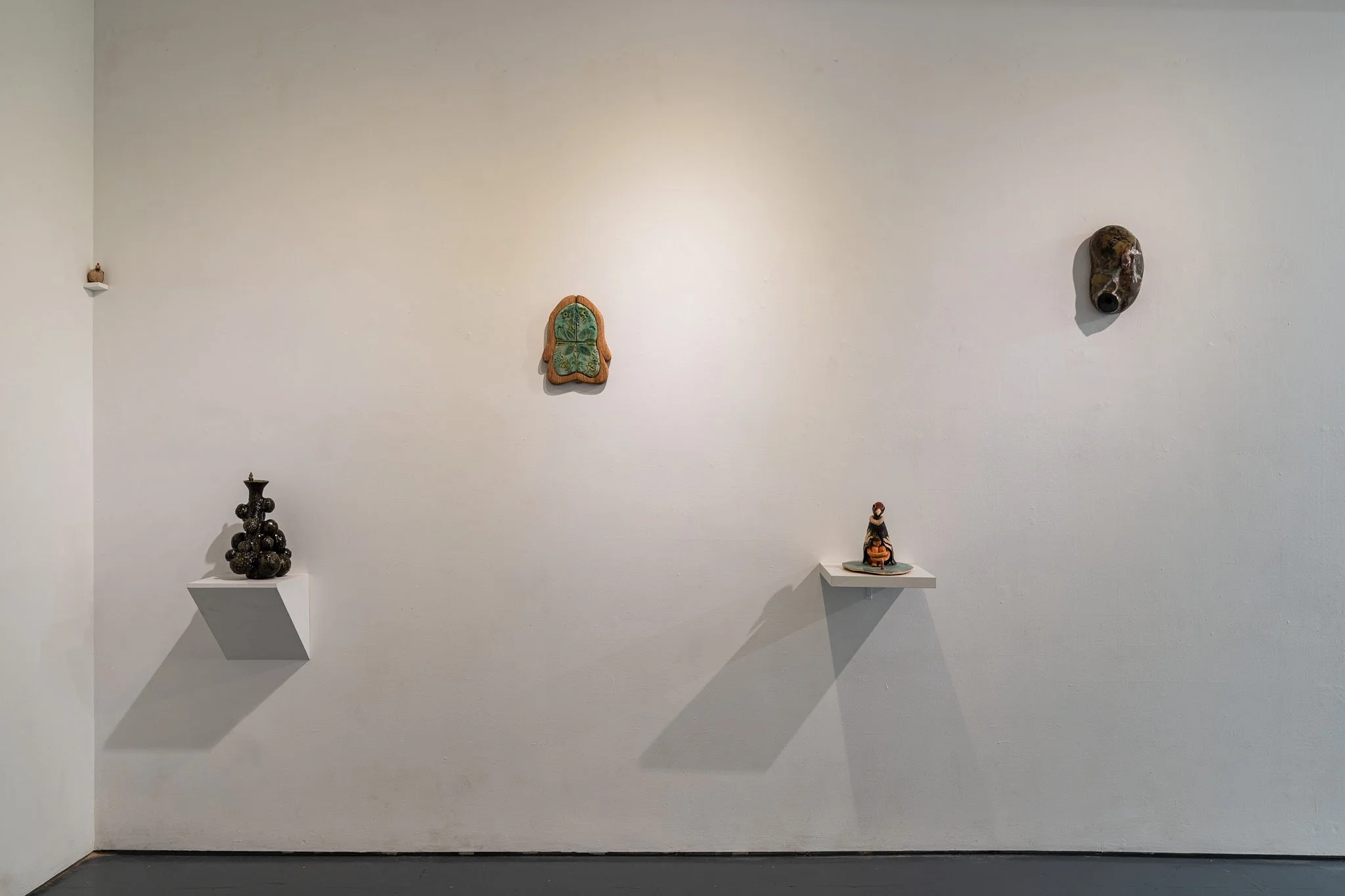
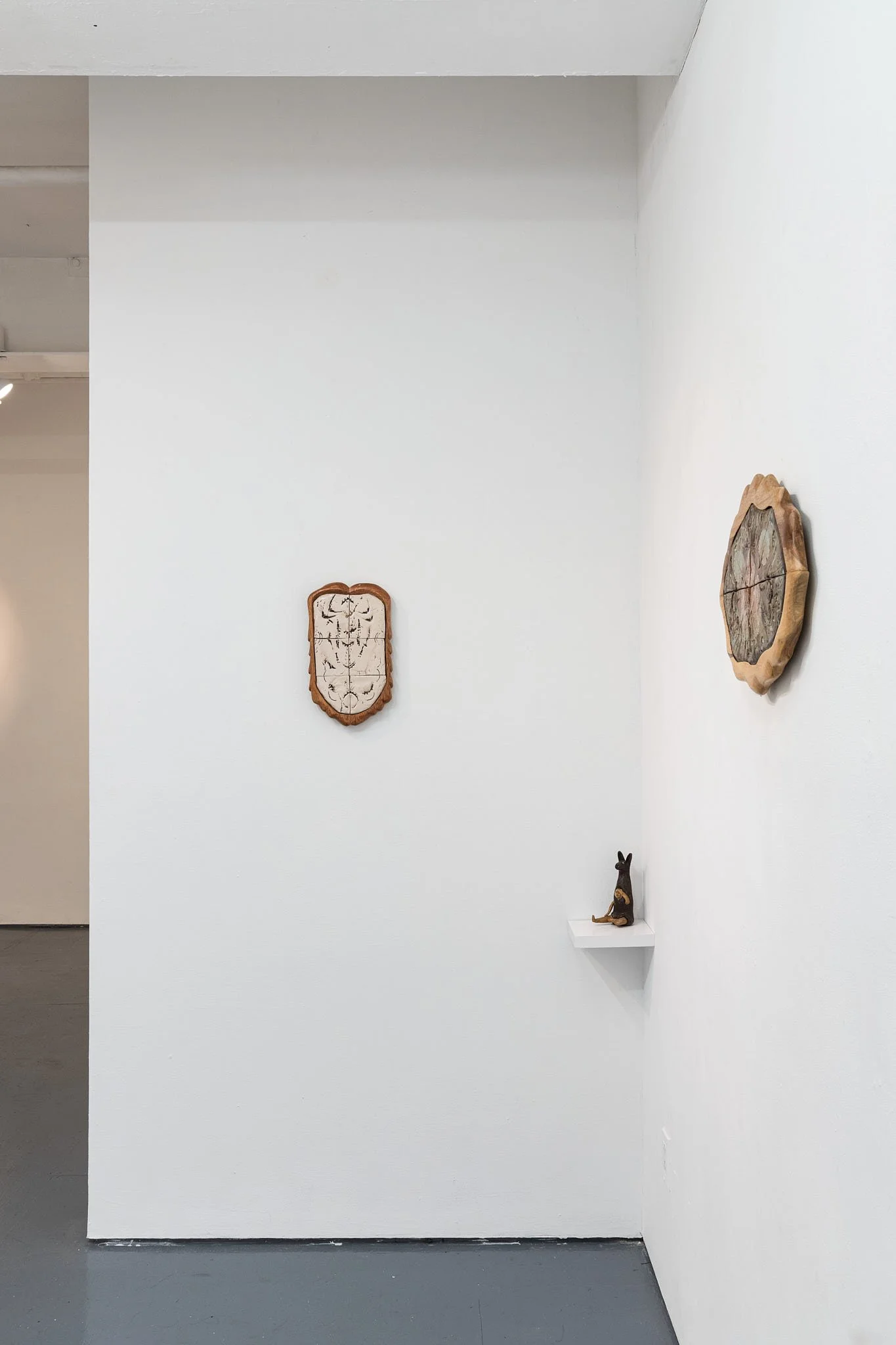
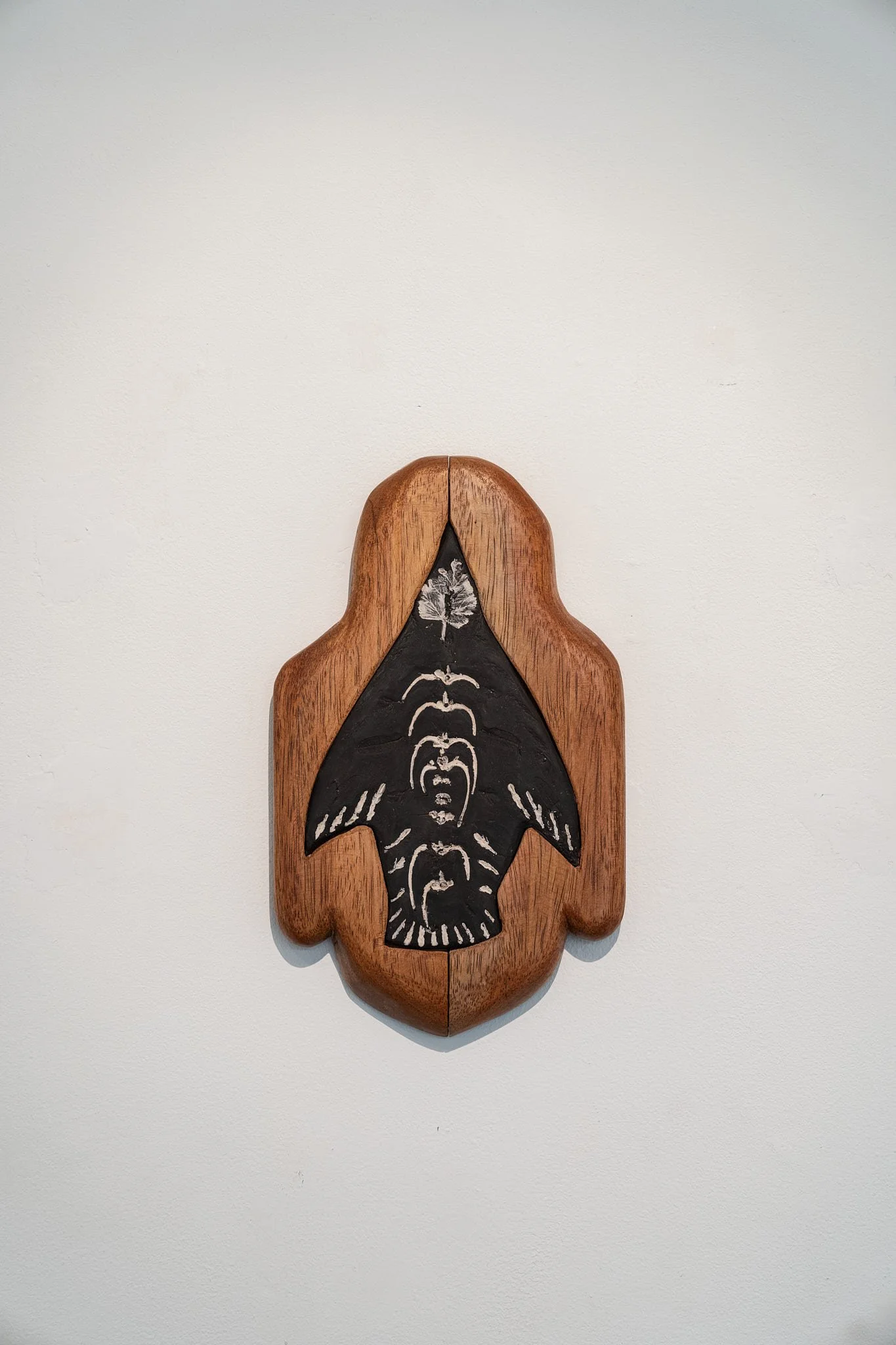
In Inventario Cascada (2025), the piece functions as a support that incorporates fragments of the fluvial ecosystem on its surface. It is framed by a carved pinewood structure sourced from a nearby forest. Its reliefs register a microcosm in which leaves, flowers, and rocks trace the contours of a specific site. The object can be understood as a sensory map in which the river is not represented, but rather traced.
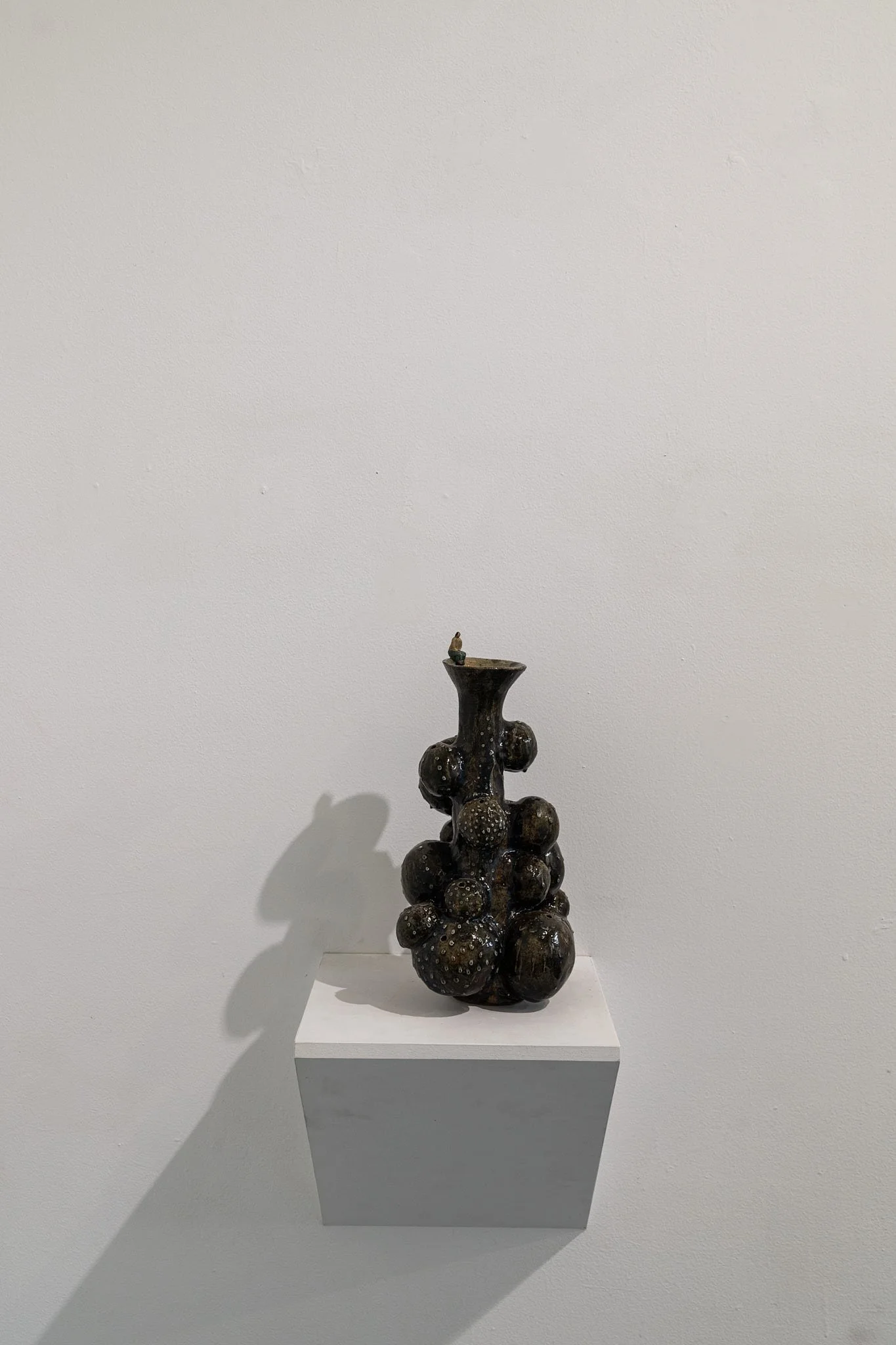
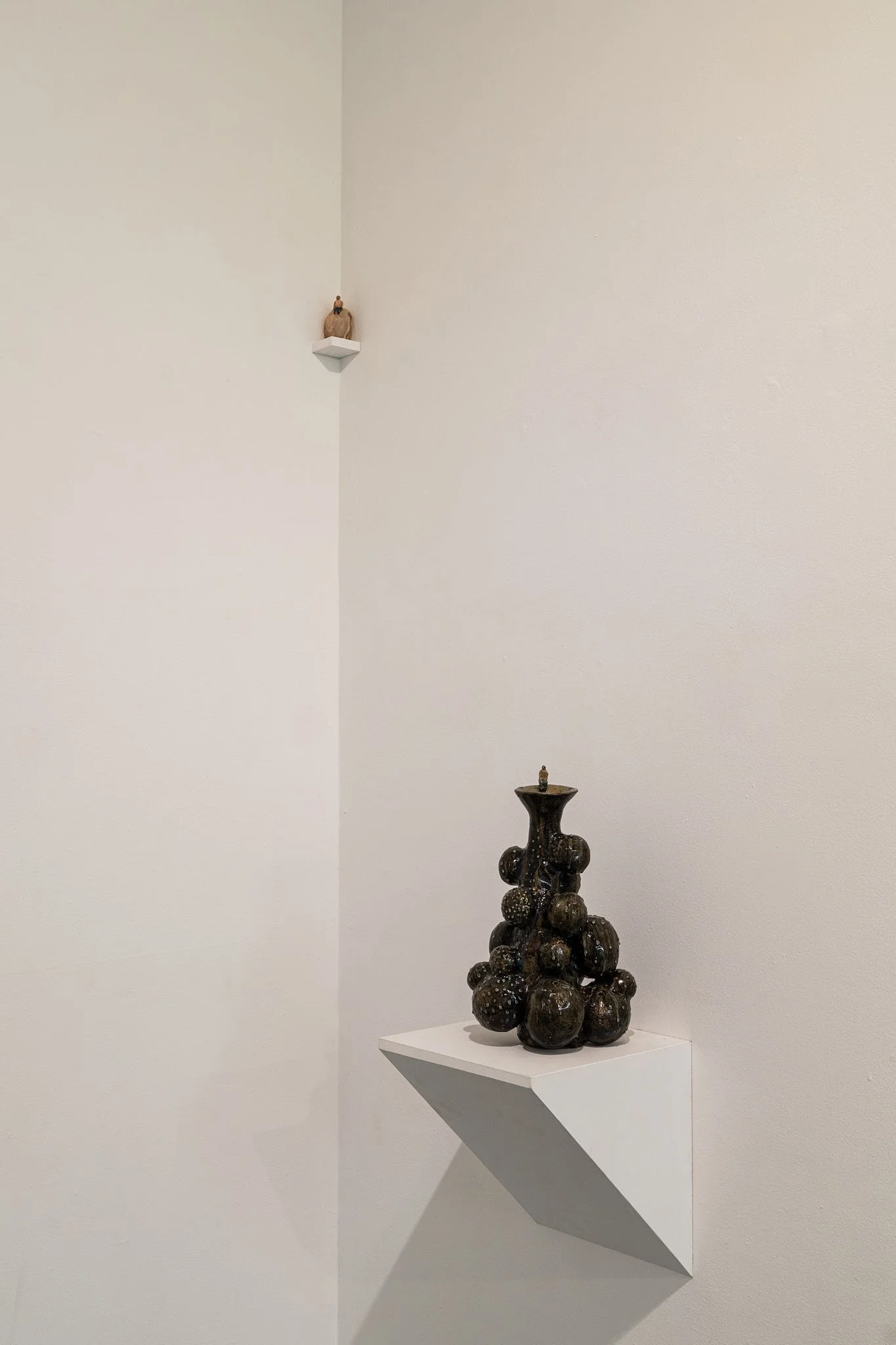
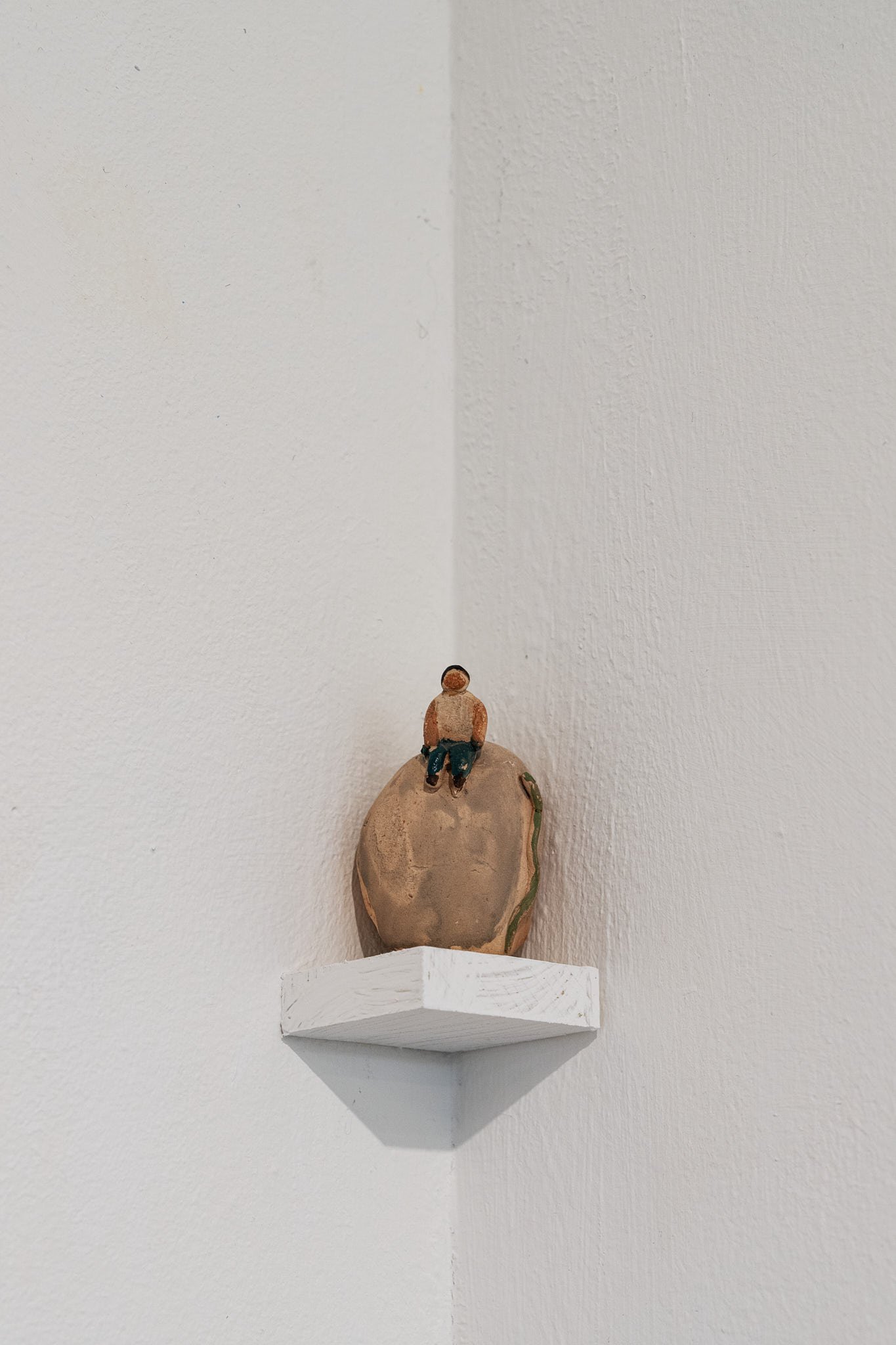
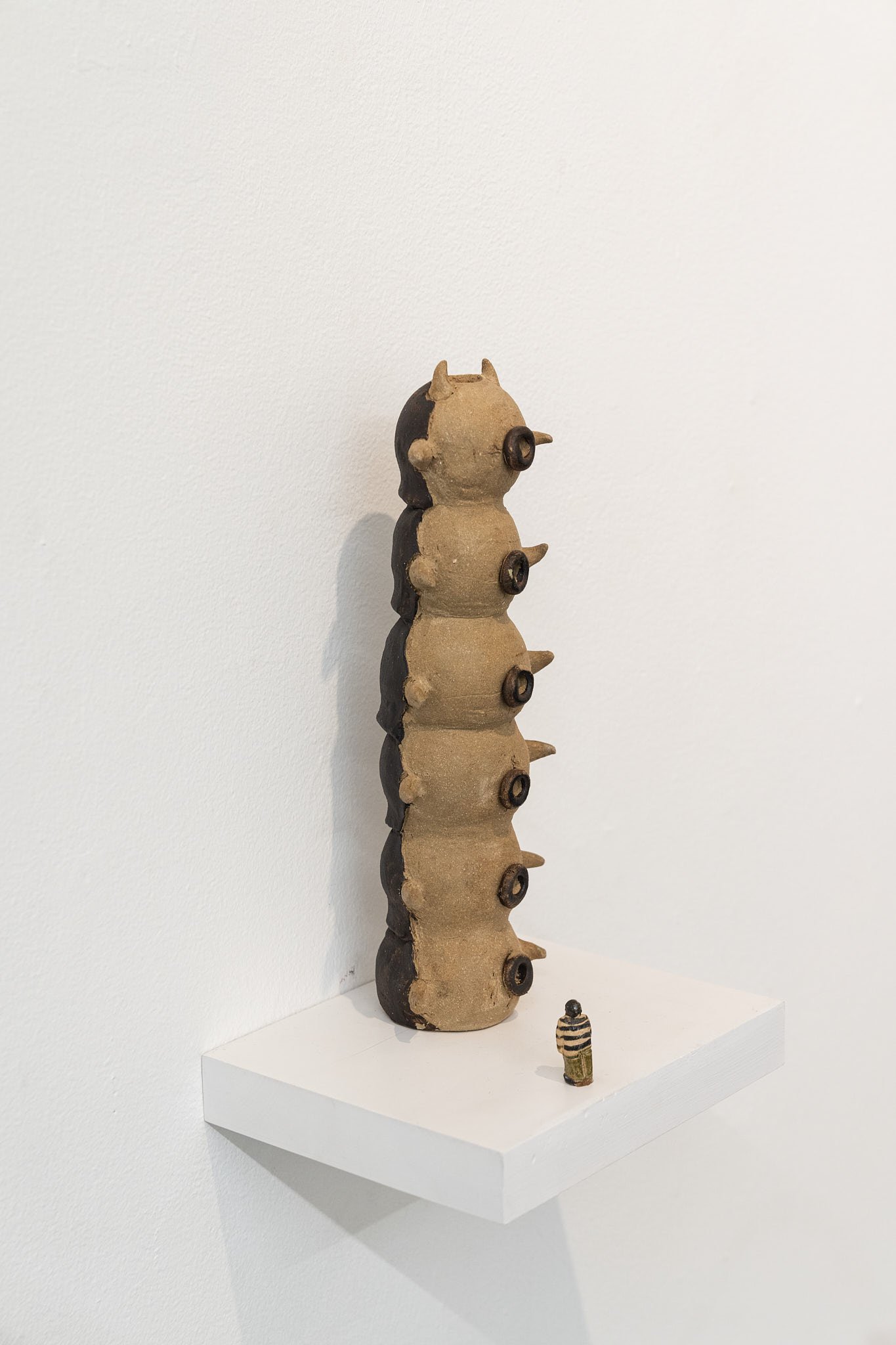
In Paisaje 1 (2025), the object assumes an organic, biomorphic form that simultaneously evokes the bodily, the vegetal, and the geological. As an aroma diffuser, it releases scents—its waters, herbs, and surrounding elements—to construct an olfactory landscape. At the edge of the piece, a human figure adopts a contemplative posture that suggests the becoming of this landscape into materiality and scent.
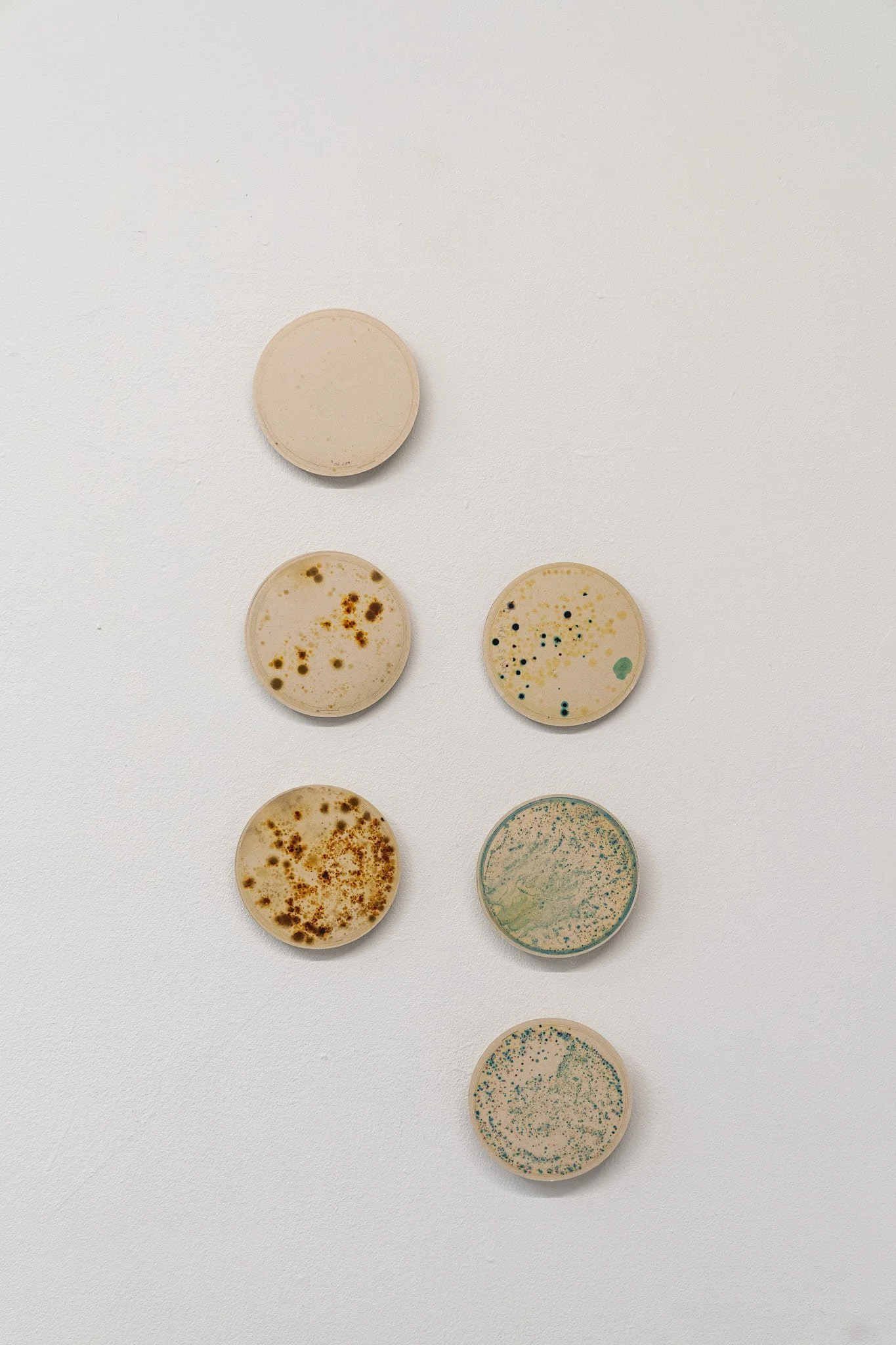
Within this framework, ceramics can be understood as a surface that contains and extends the river. Clay, as a sedimentary material of hydrological origin, is directly linked to the processes of erosion, accumulation, and deposition that shape the riverbed. Far from being hermetic, it absorbs moisture, retains traces, and is altered through contact. Both the fluvial course and these pieces organize forms through voids and displacements, in which traces of their own becoming are inscribed.
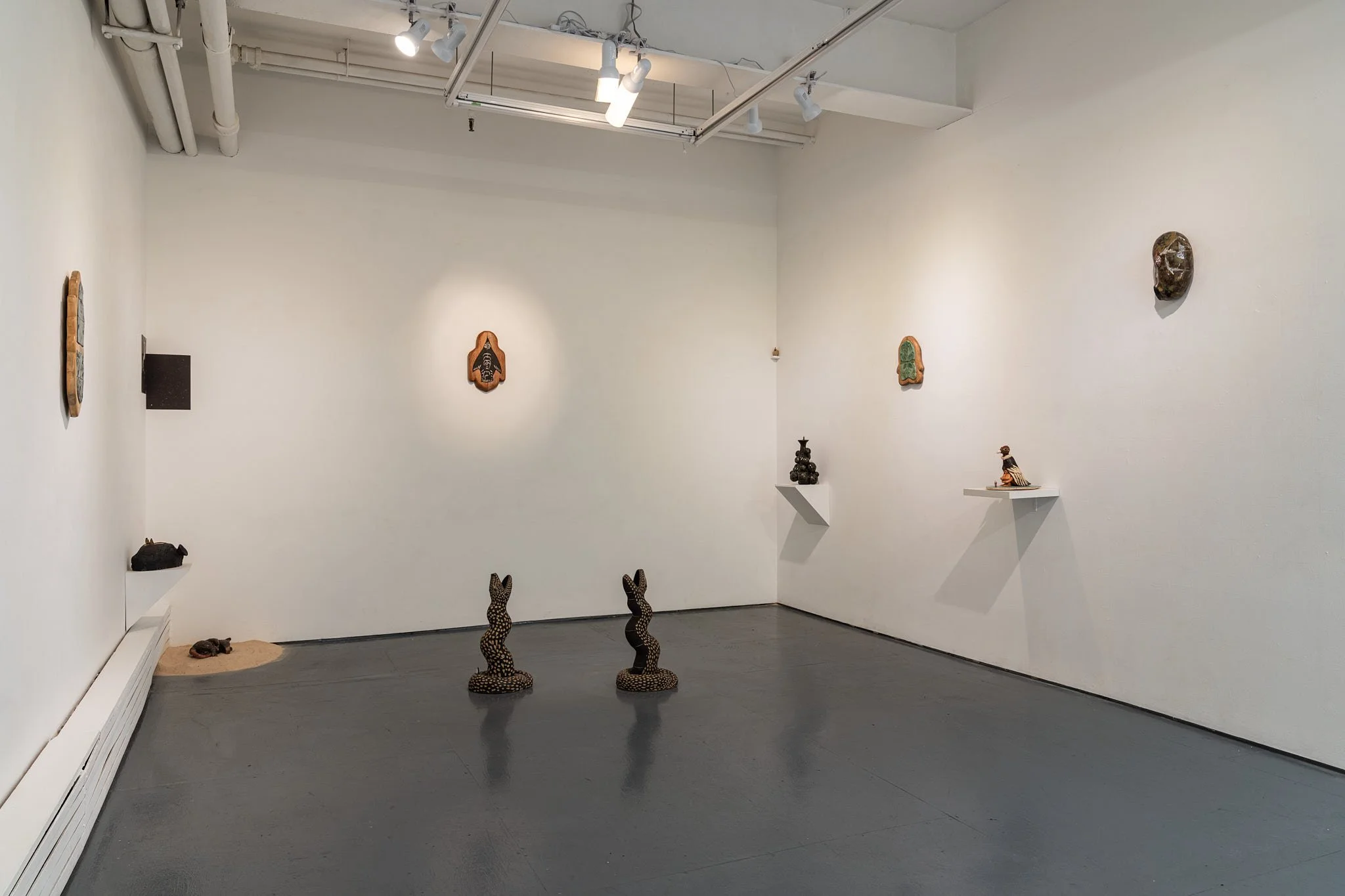
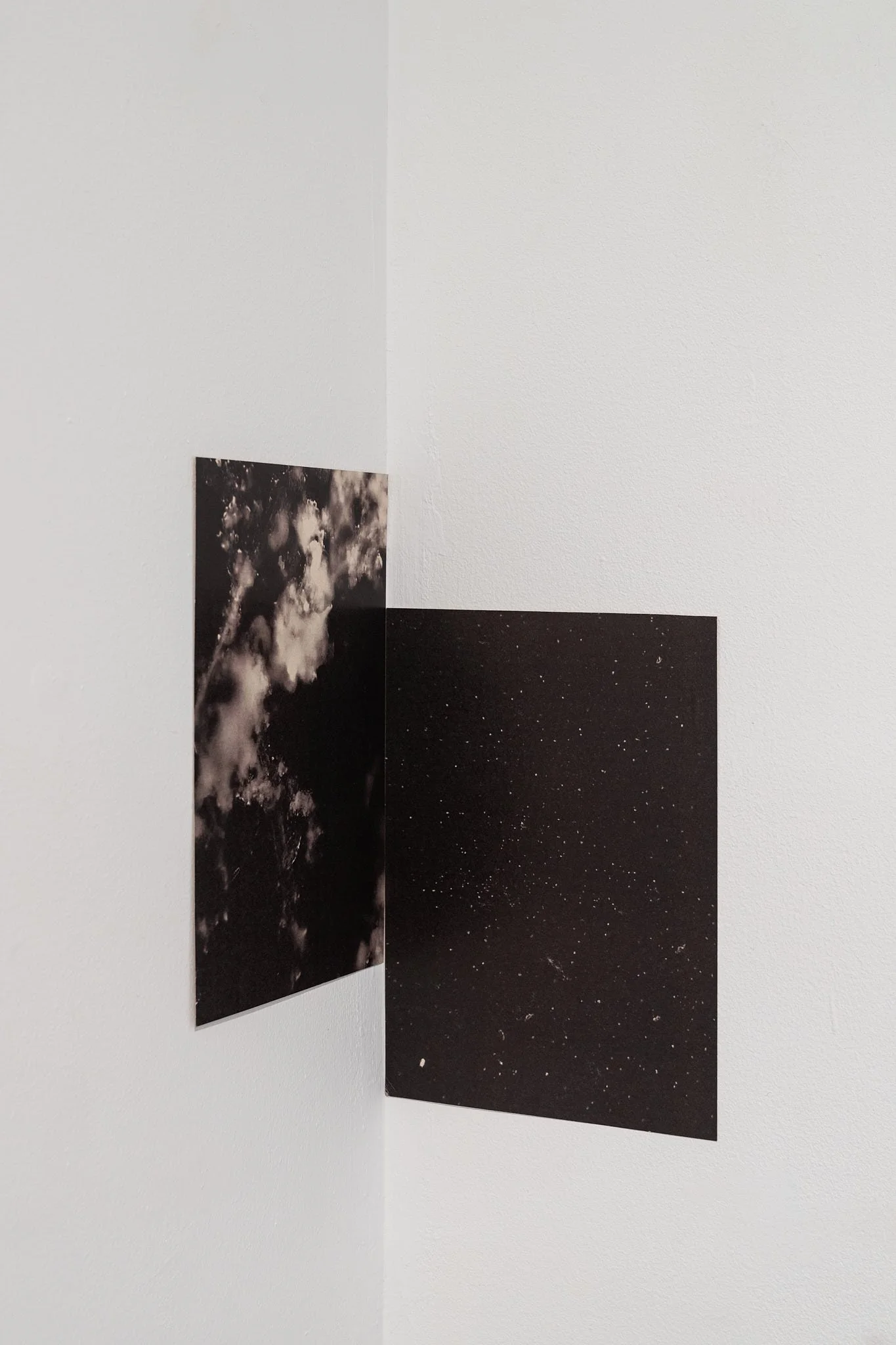
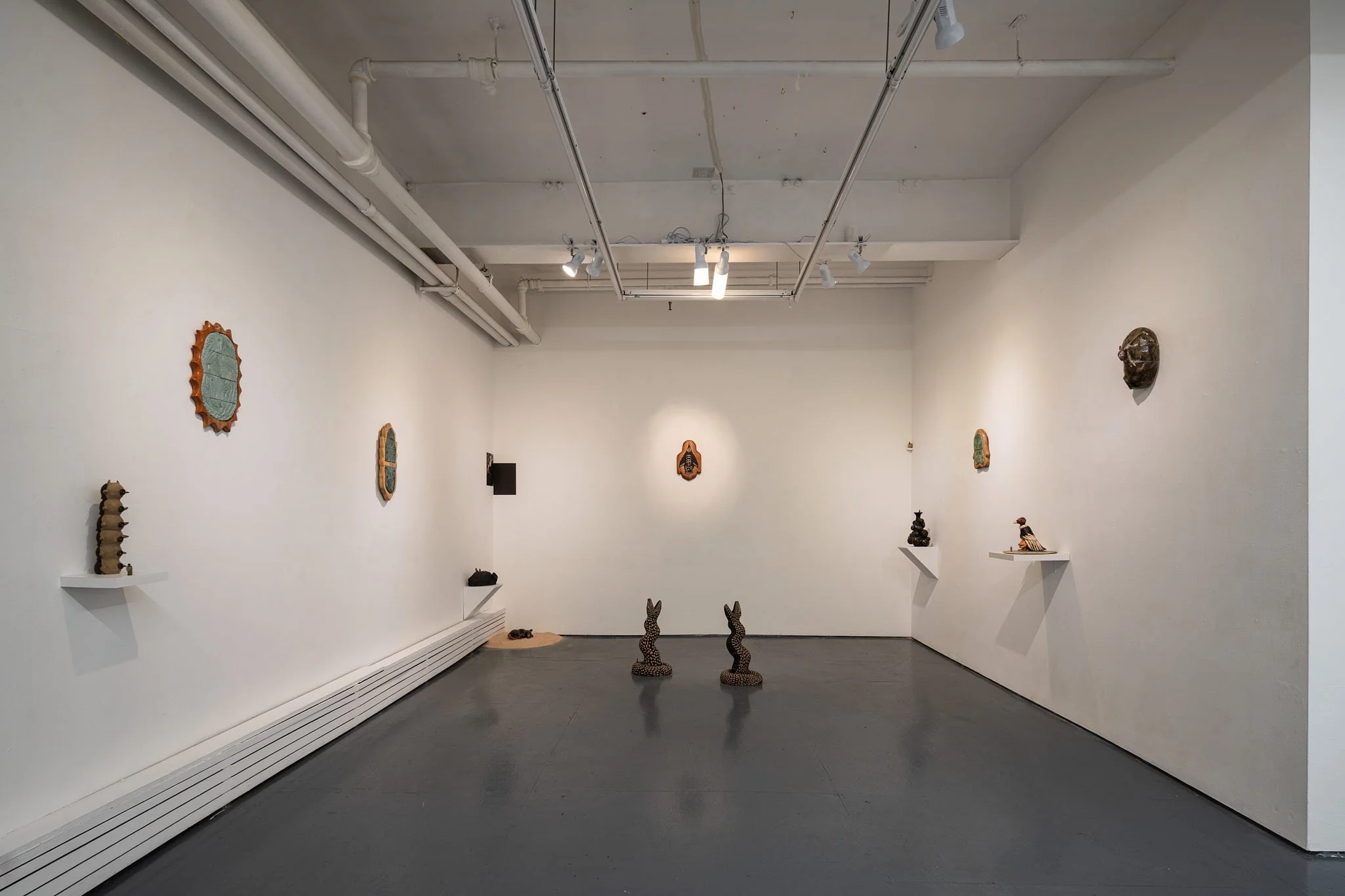
The body of work emerges from a complex affective relation with the Machángara—between attraction, discomfort, and familiarity. The exhibition brings together approximately ten pieces that incorporate plant-based distilled aromas, recordings of water in motion through the urban fabric, and inventories of collected leaves and flowers, activating the fluvial system within the exhibition space. Rather than representing the river, the proposal frames it as a force that manifests in those who traverse it, revealing the conditions through which we are implicated in its transformations.
- Eduardo Carrera R, curator
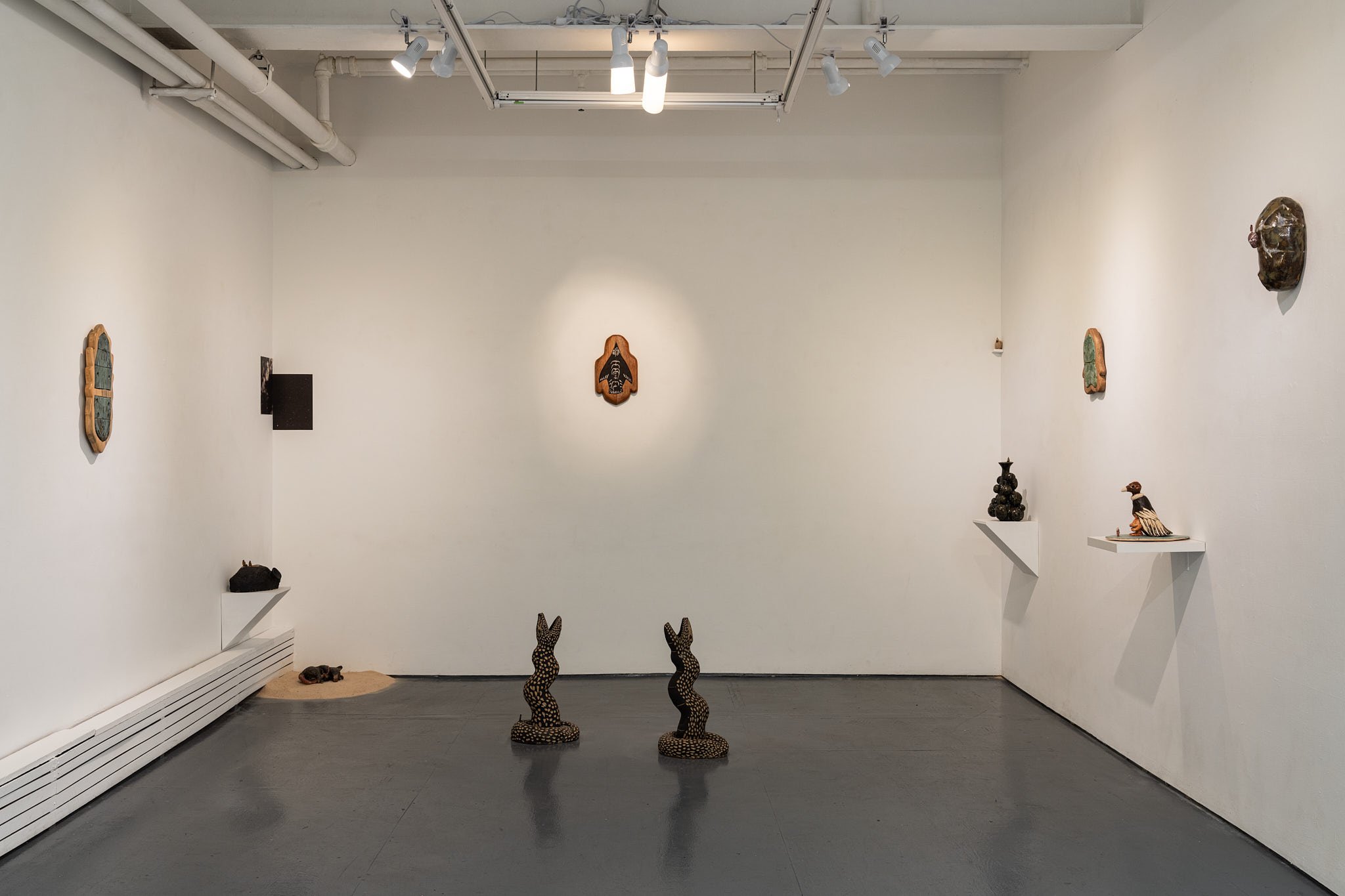
photos by Pratya Jankong