LOS ANGELES
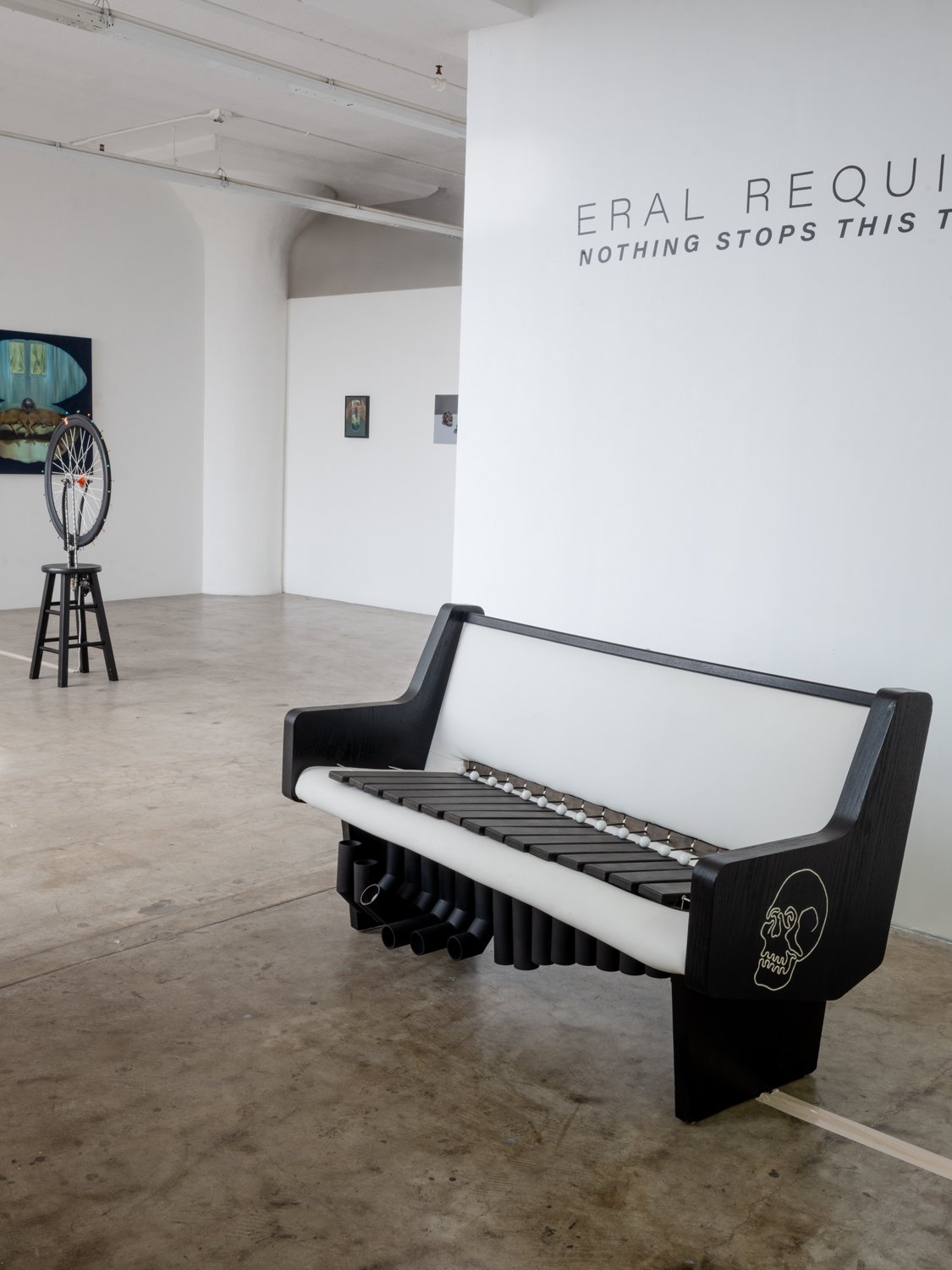
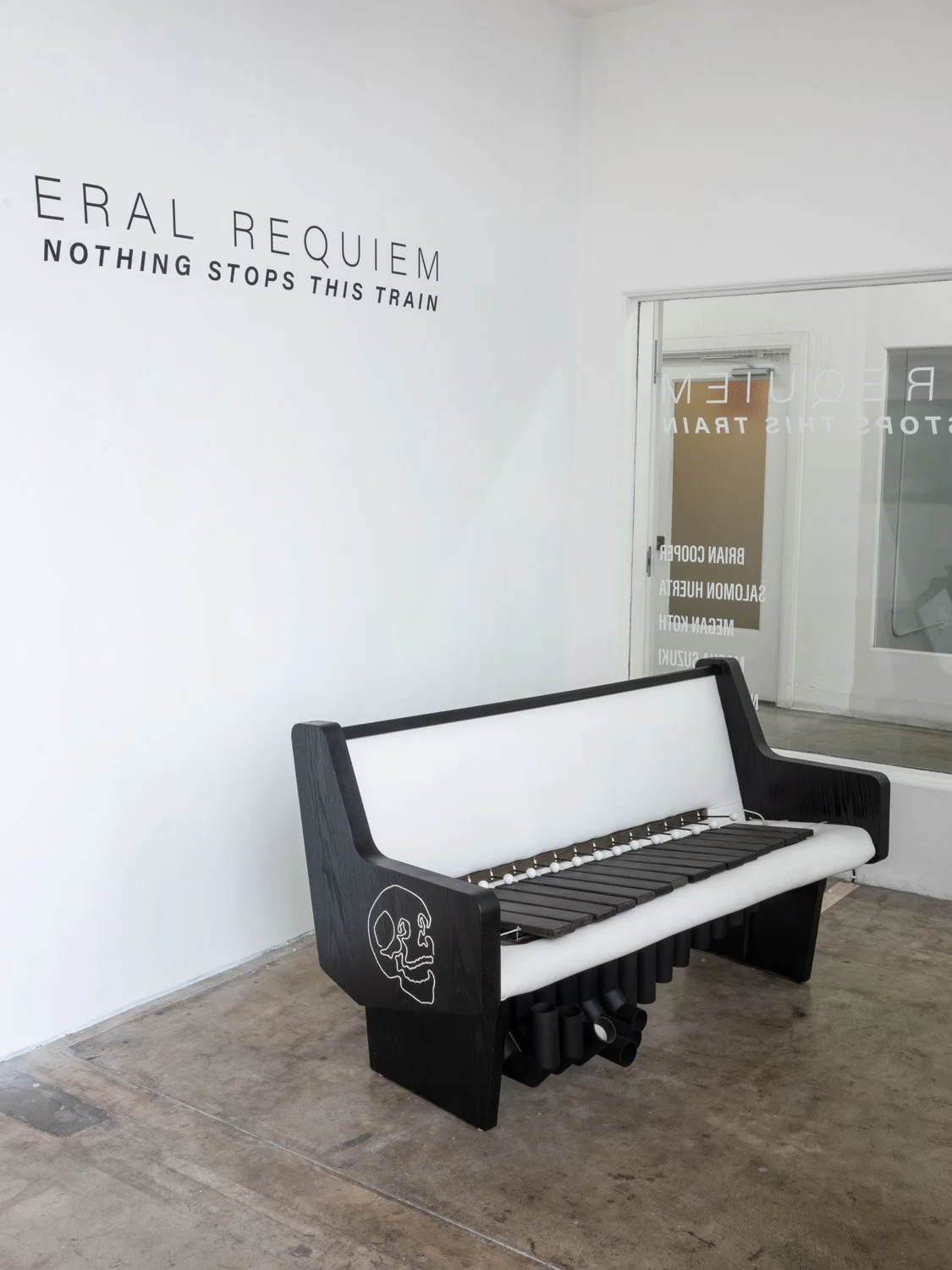
Eral Requiem | NOTHING STOPS THIS TRAIN
May 2 - 24, 2026
Opening Reception: Sat, May 2, 7-10 pm
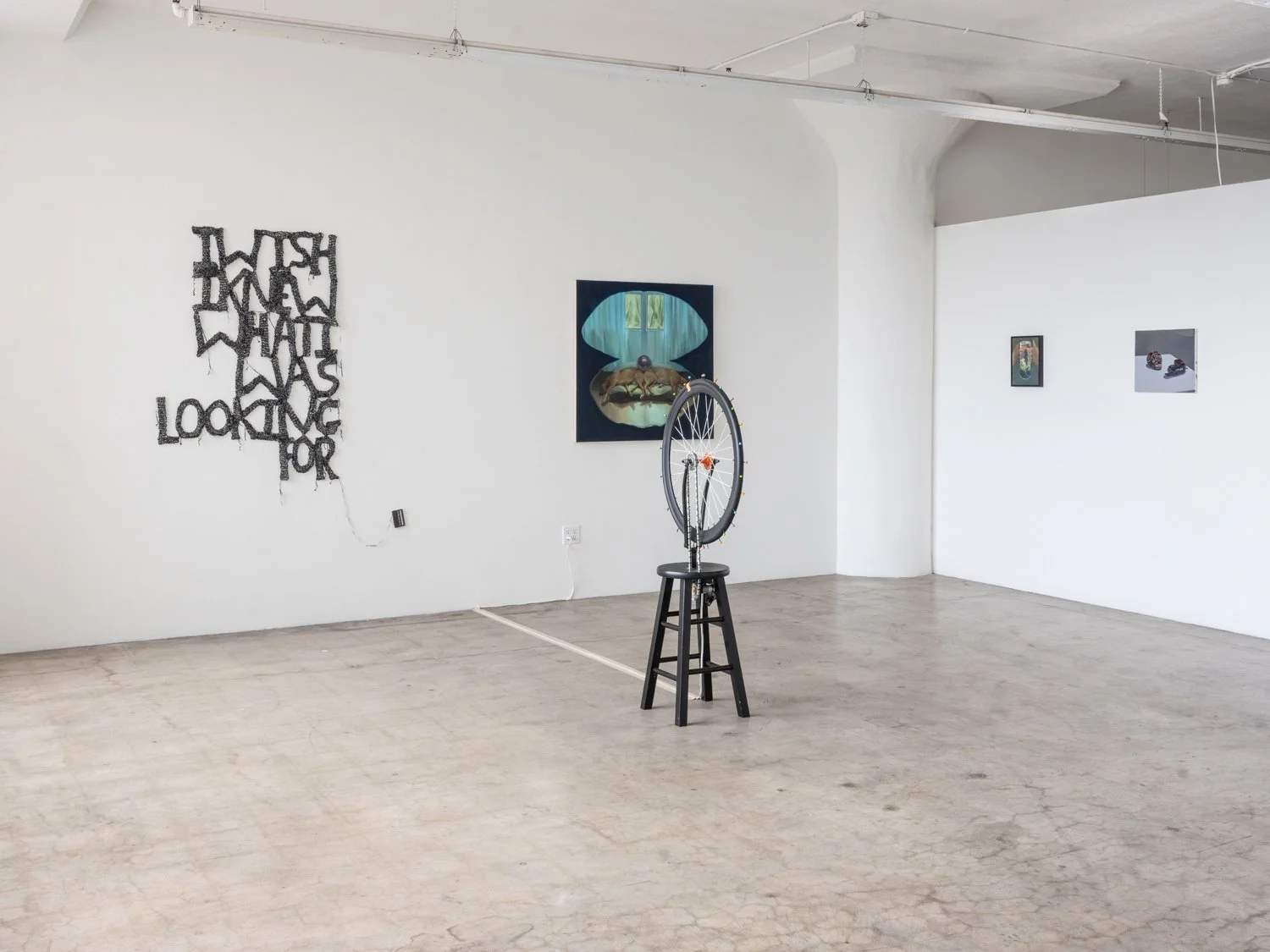
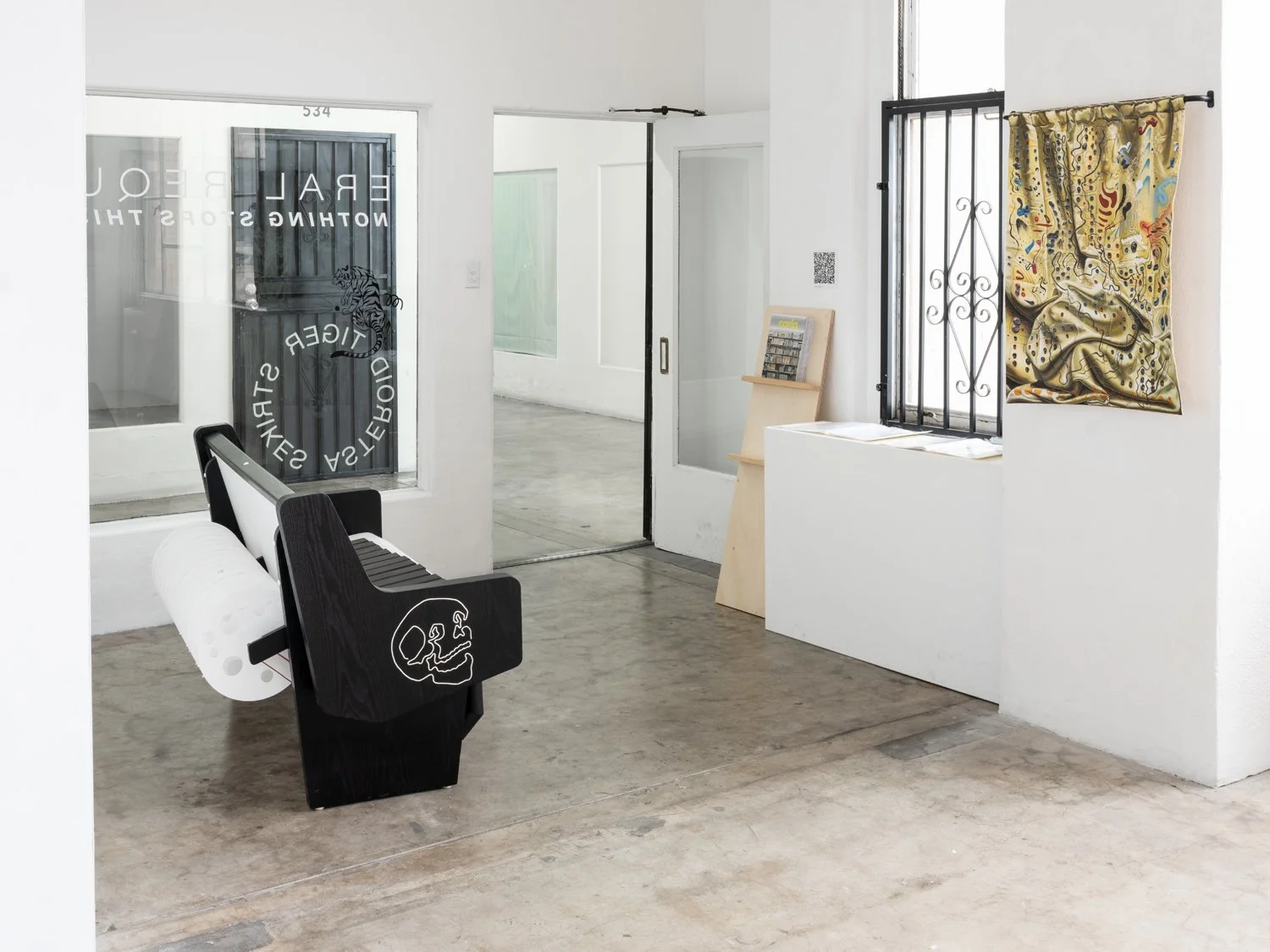
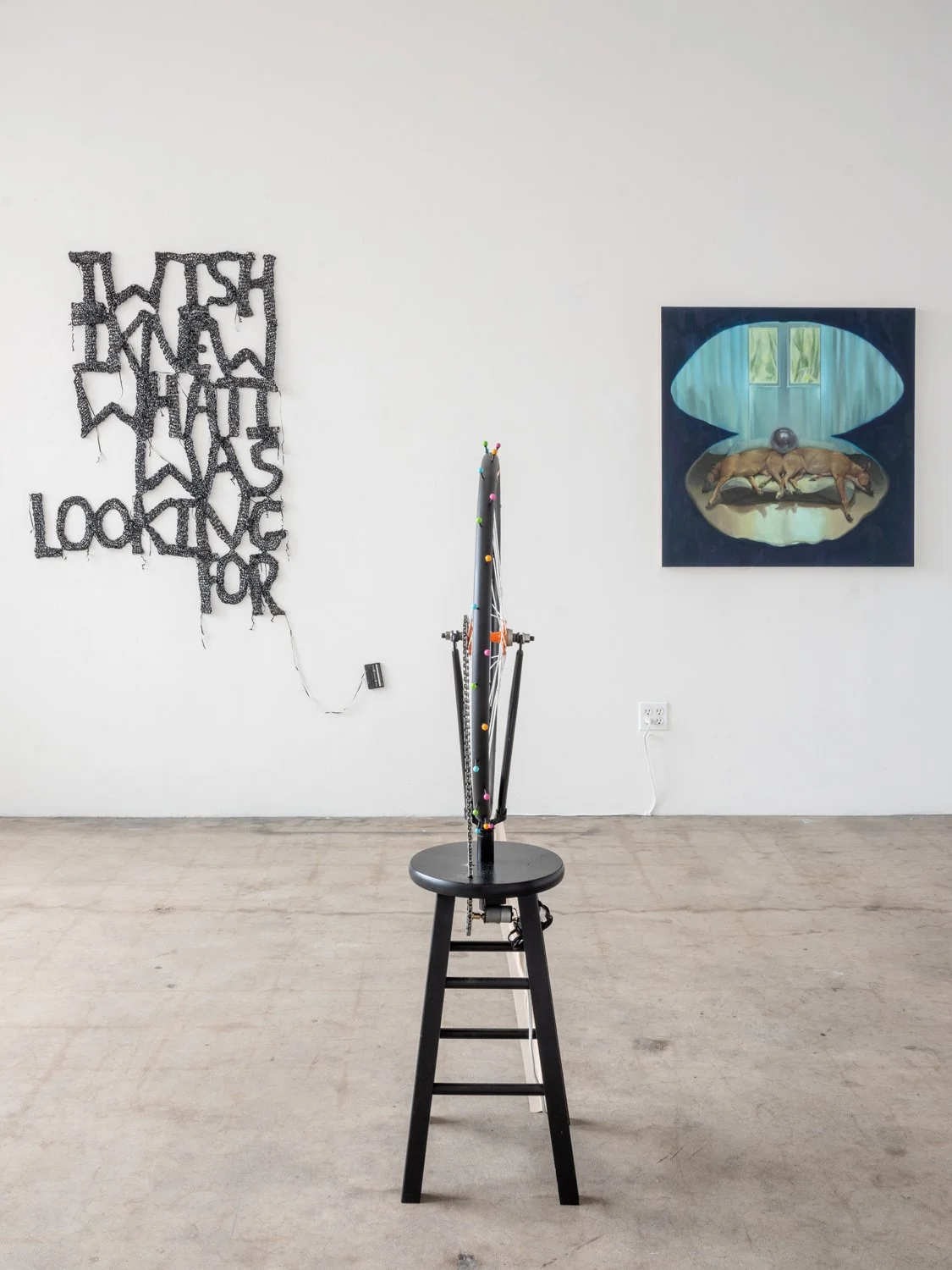
Tiger Strikes Asteroid Los Angeles presents Eral Requiem | NOTHING STOPS THIS TRAIN, a group exhibition featuring works by artists Brian Cooper, Salomon Huerta, Megan Koth, Macha Suzuki, and Nicola Vruwink. Through the works of these 5 artists, the exhibition explores ideas related to Memento Mori and Vanitas, with recent developments in geopolitics and technology serving as a backdrop to contemplate the nature of transience, death, change, and obsolescence.
Trump V2.0, ICE, tariffs, Venezuela, Greenland, Roe v. Wade, A.I., humanoid robots, self-driving cars, Epstein files (+everything that entails), U.S involvement in Ukraine and Middle East conflicts, etc.; with all these unprecedented happenings, it wouldn’t seem too out of pocket to make the argument that America — with the rest of the world — is experiencing one of the most head-spinning, surreal, and unpredictable moments in recent history. It’s difficult to wrap one’s head around even one of these realities, but for some reason, this is the new normal.
Within trading and crypto circles, investment strategist, Bitcoin advocate, and macroeconomic analyst, Lynn Alden, popularized the phrase, “Nothing stops this train,” Alden, herself, quoting Walter White from Breaking Bad, Season 5, referring to the inability, on a structural level, for the U.S. government to meaningfully deter the advent of runaway inflation or the hemorrhaging national debt. According to Alden, this irreversible slow-motion slide toward economic decline is written into the DNA of America’s monetary infrastructure, laws, citizenry, and federal government.
In other news, investigative journalist Ronan Farrow just published a blistering story in The New Yorker about OpenAI founder Sam Altman, painting a disturbing portrait of the individual often given credit for ushering in the AI era. Many safeguards initially implemented at OpenAI have allegedly been deprioritized for the sake of lowering costs and maximizing revenue. Leaders within the community concede that the proliferation of AI, in the best of worlds, will require unprecedented resources and dramatically change the nature of human capital. At worst, they believe it could have catastrophic effects on the job market, environment, privacy & security, and human existence as we know it. According to AI whistleblower and author, Karen Hao (who has written for The Atlantic, WSJ, MIT Tech. Review), Altman, Amodei, Musk et al. seem to be operating under the notion, “That’s why we need to be in control of the technology, because that’s the only way it’s going to go really, really well.”
In other words, nothing stops that train either.
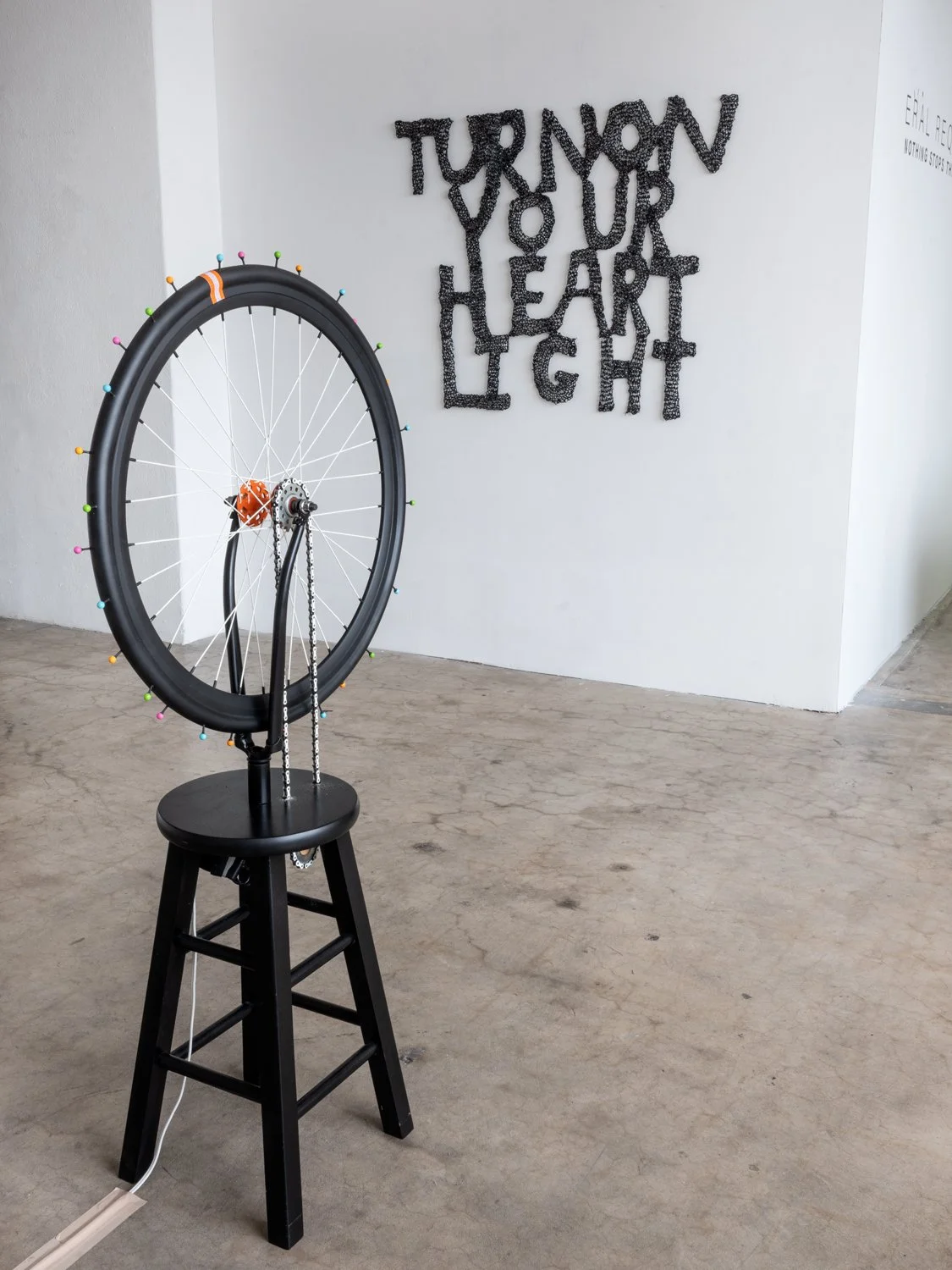
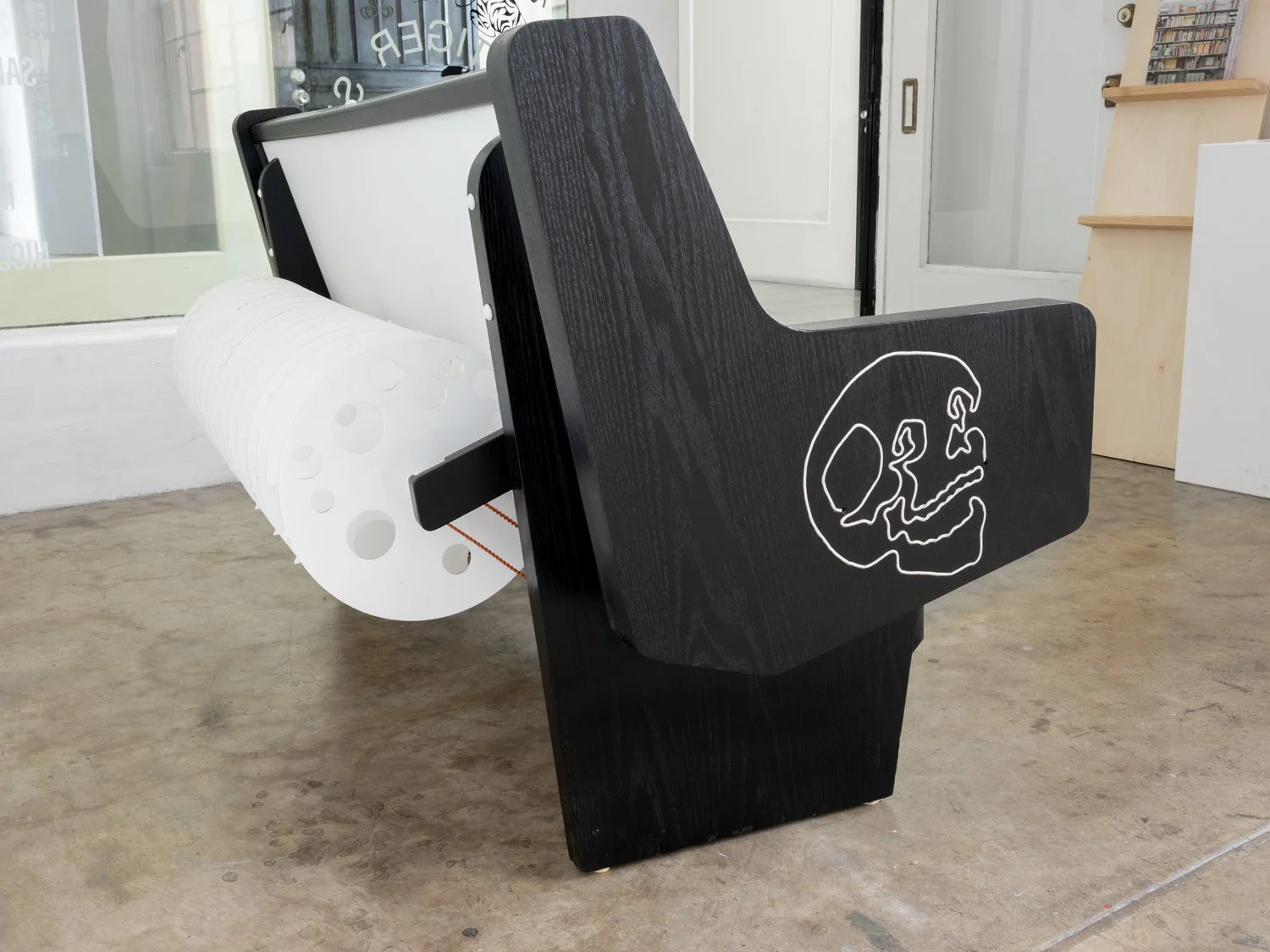
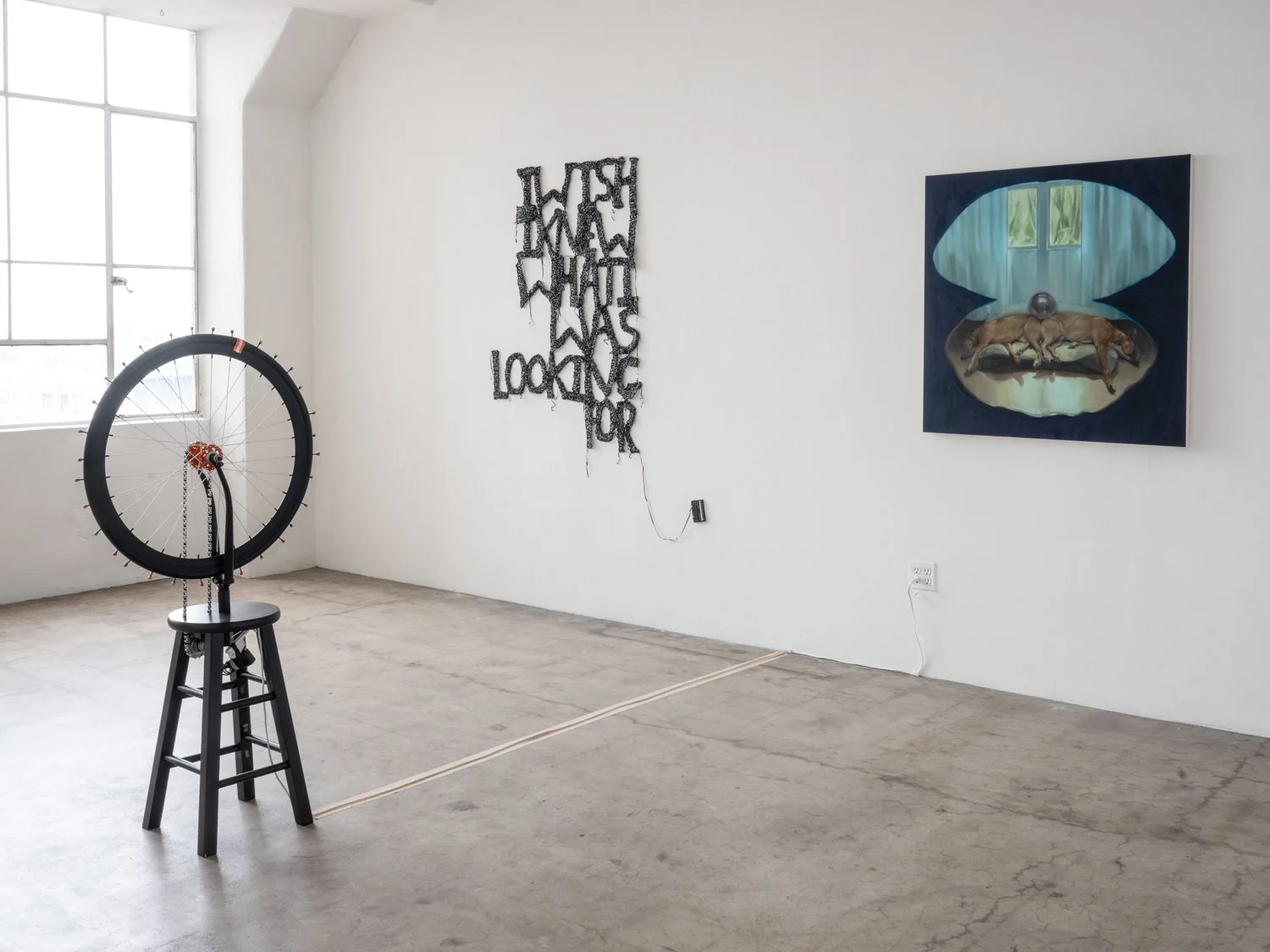
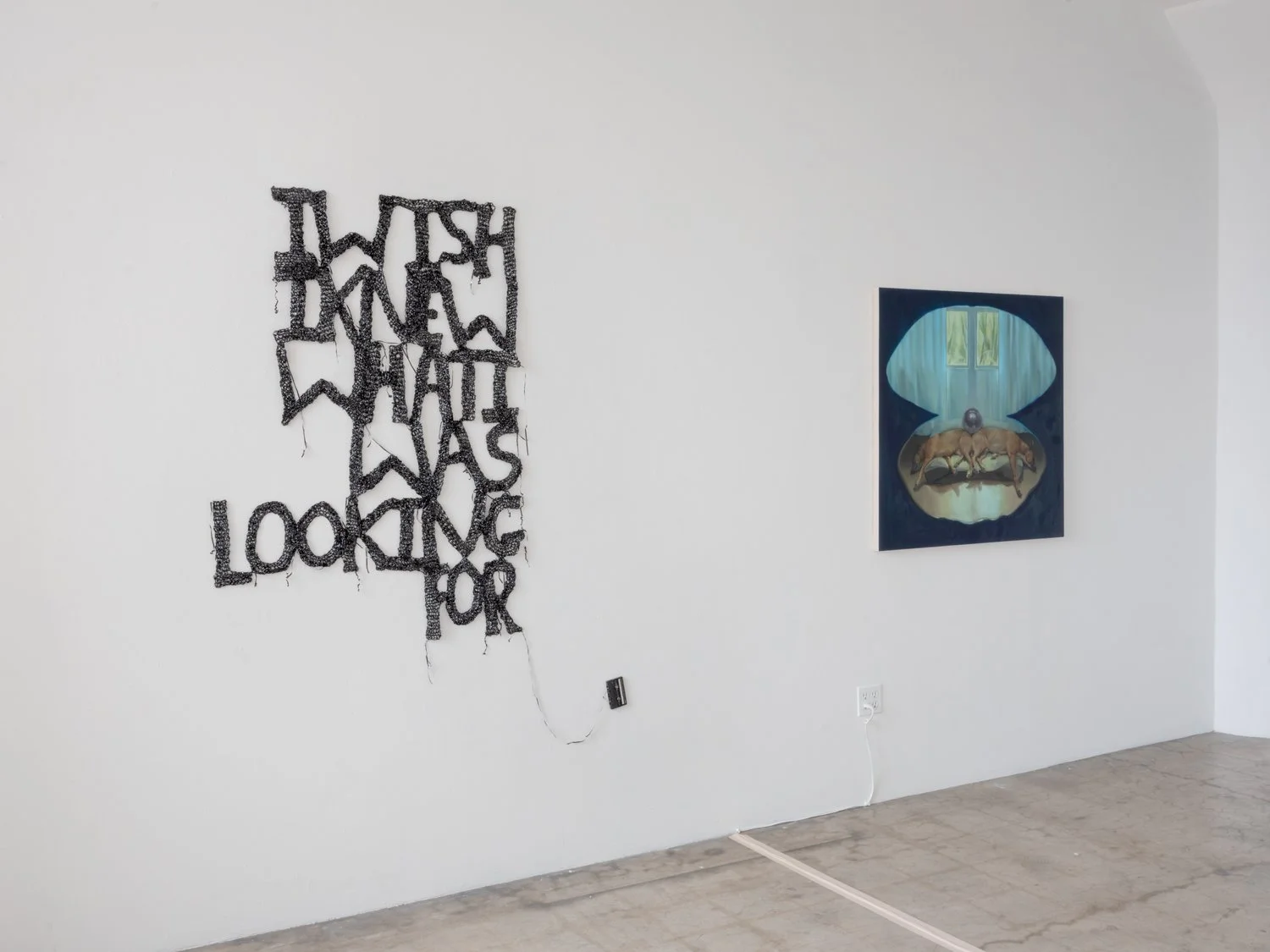
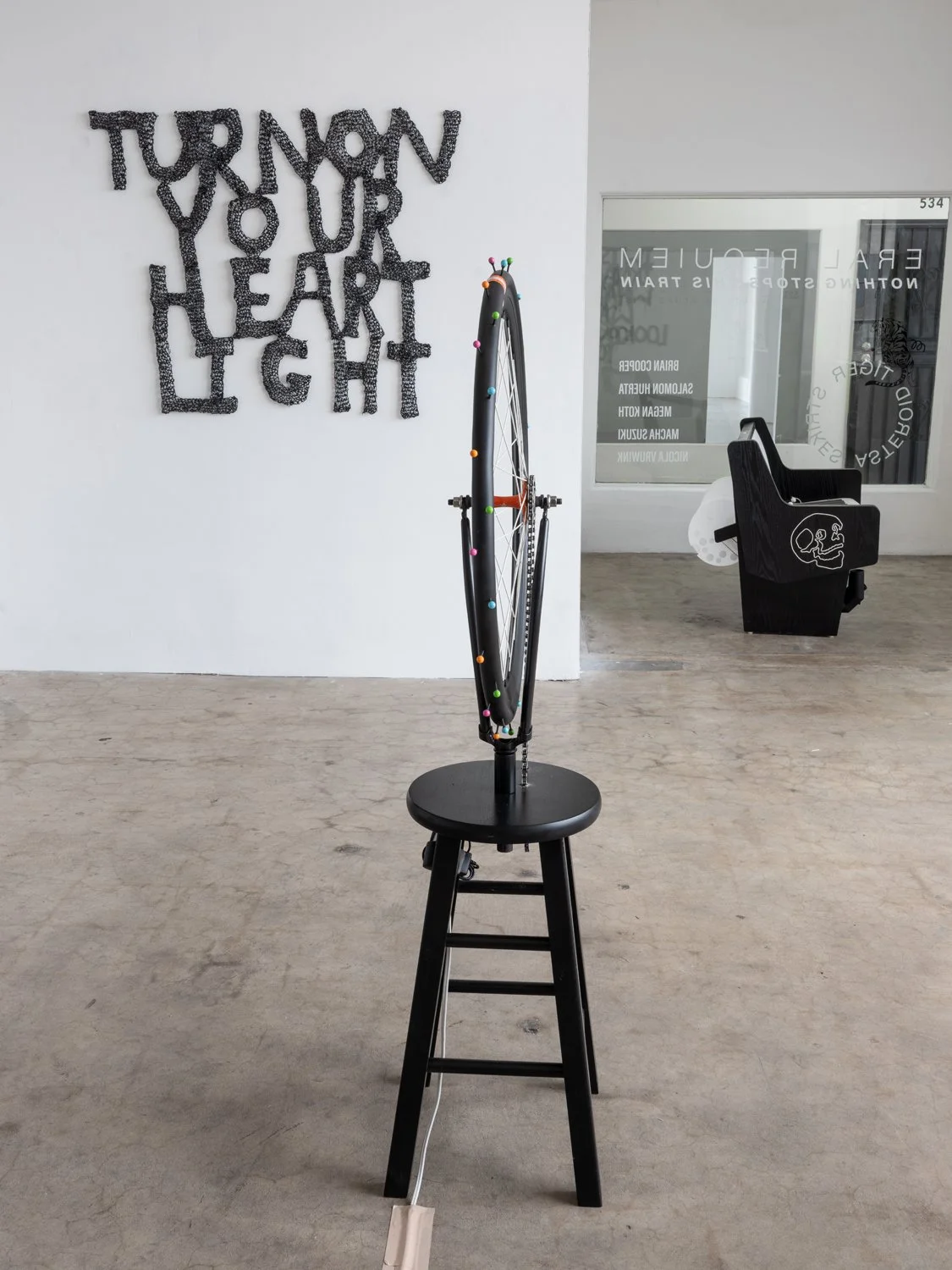
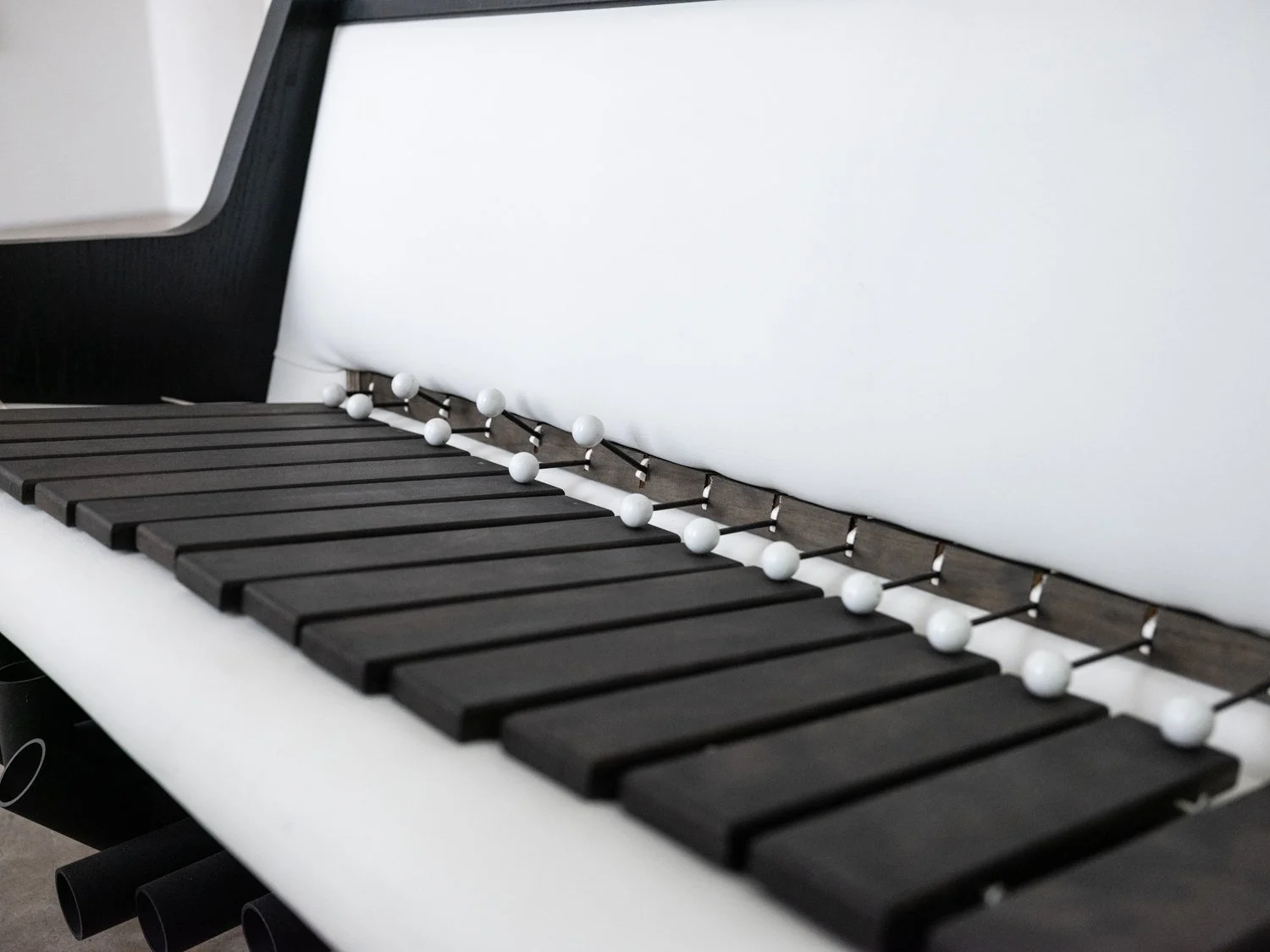
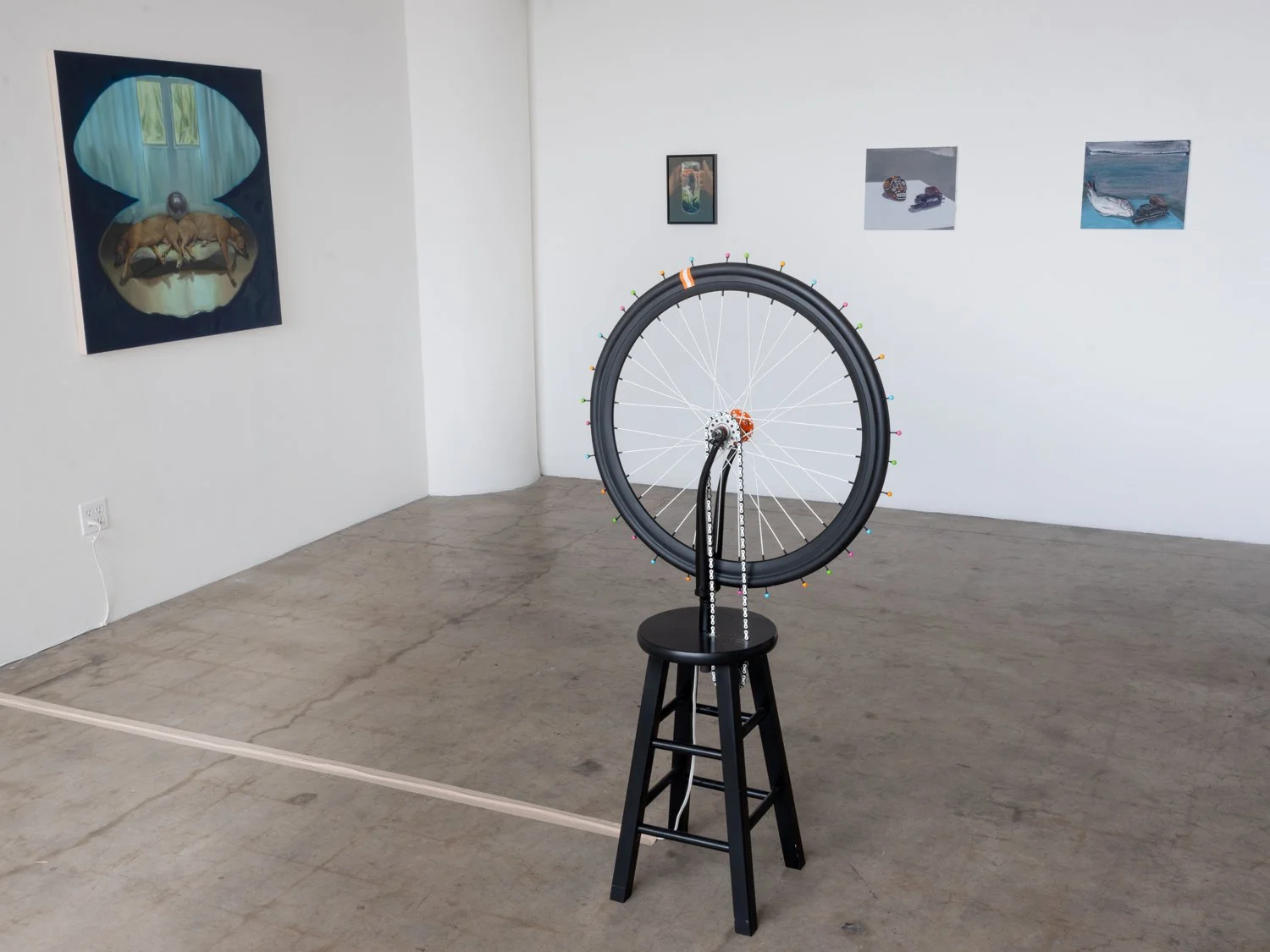
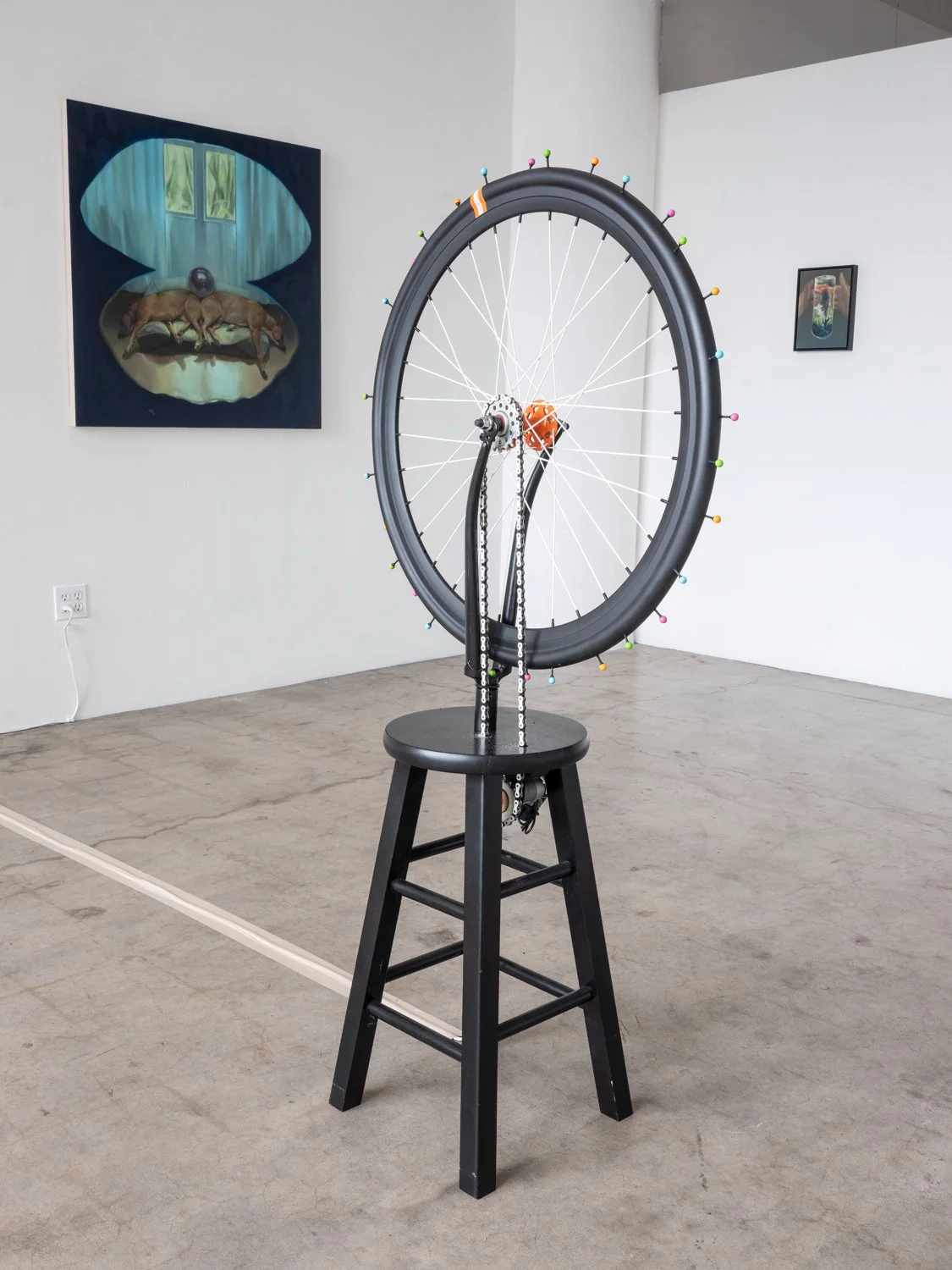
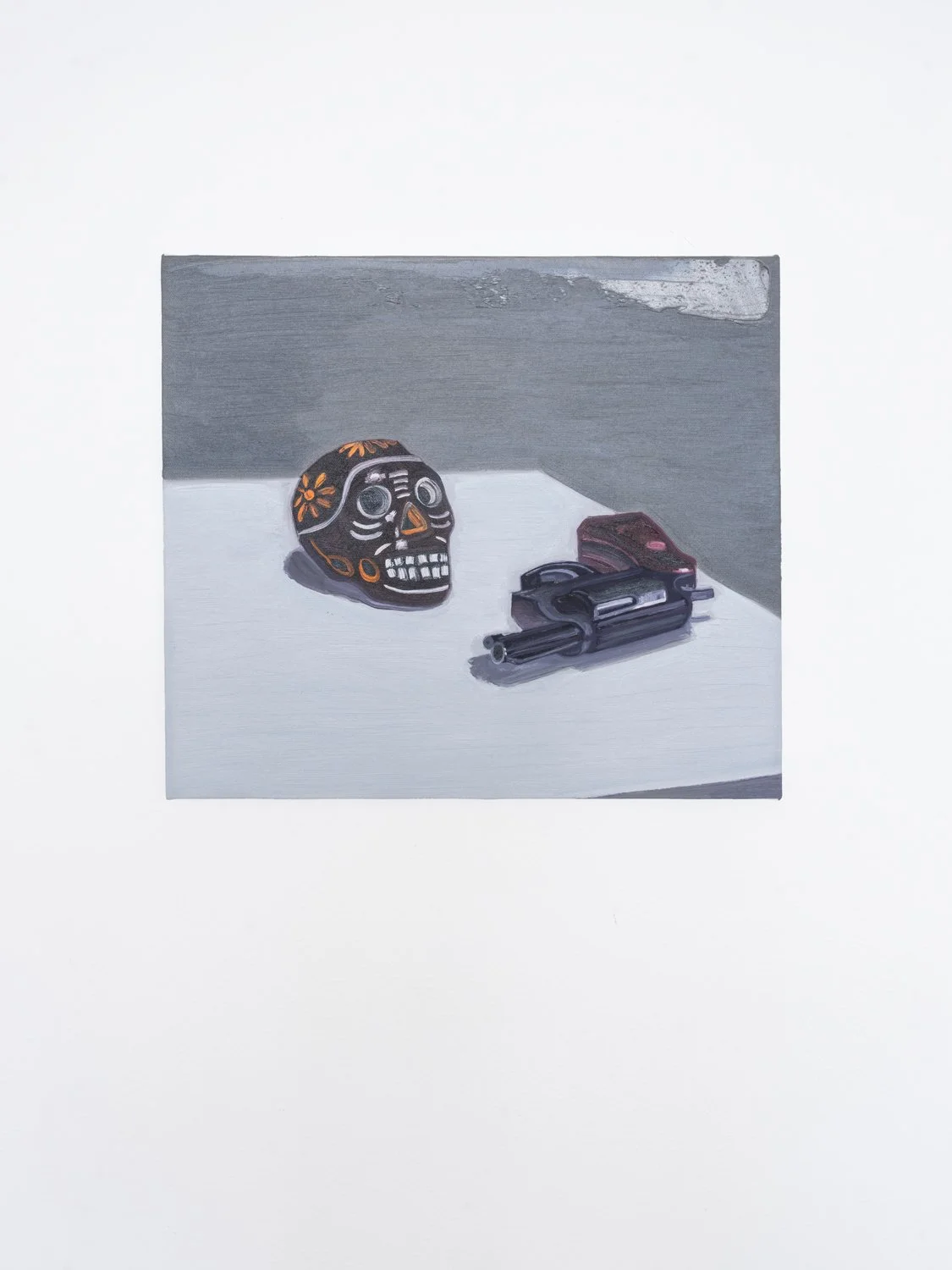
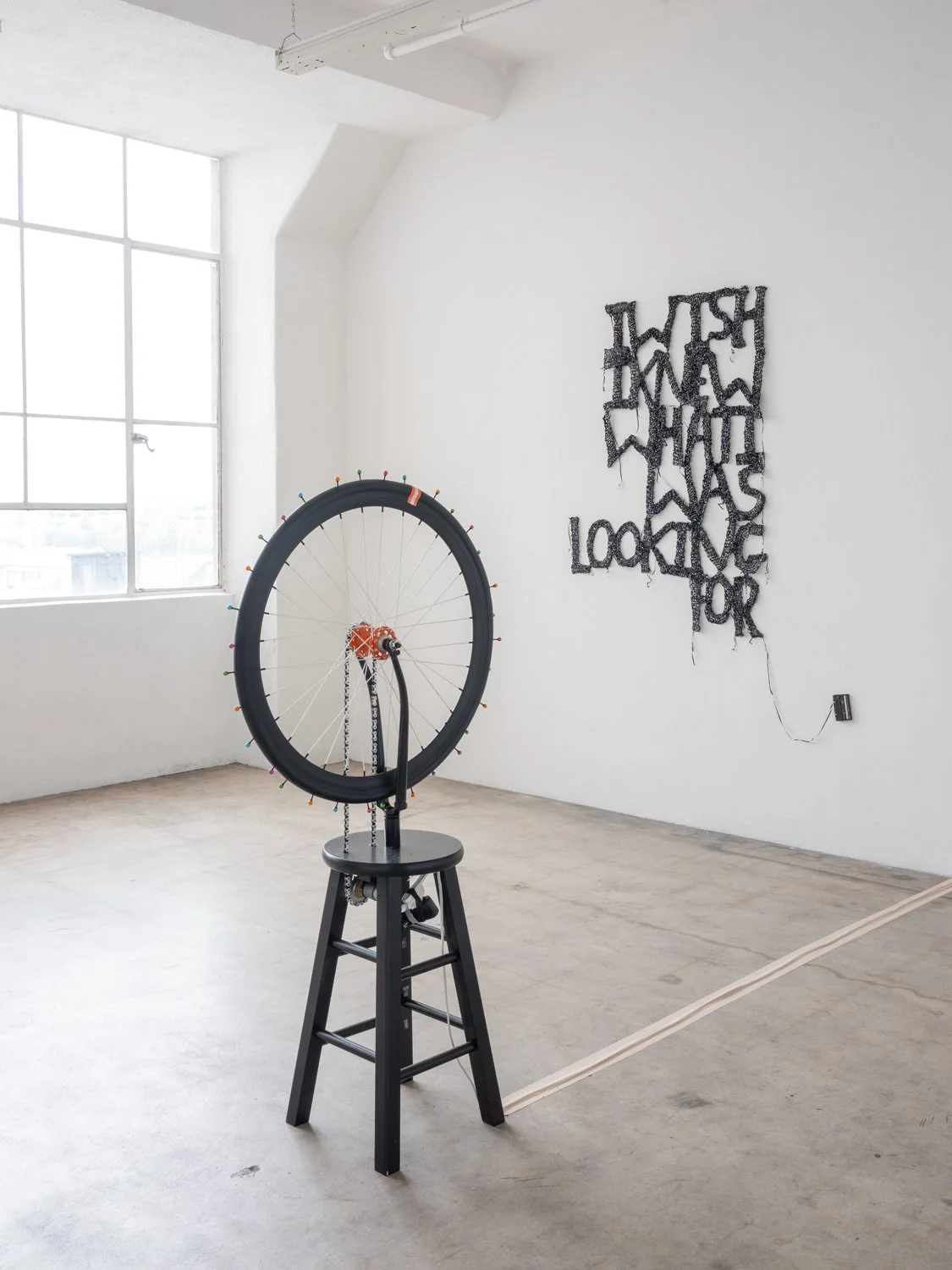
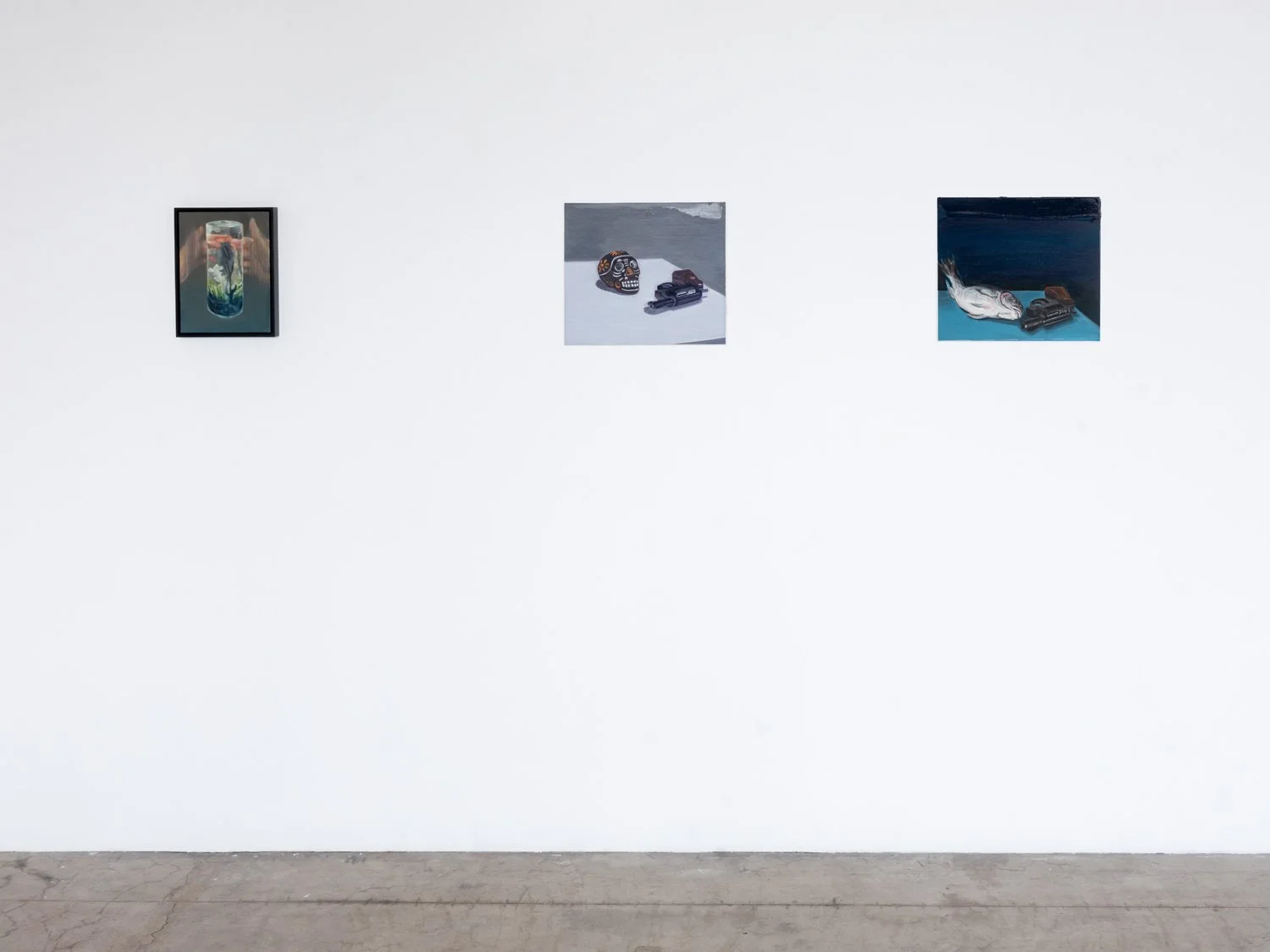
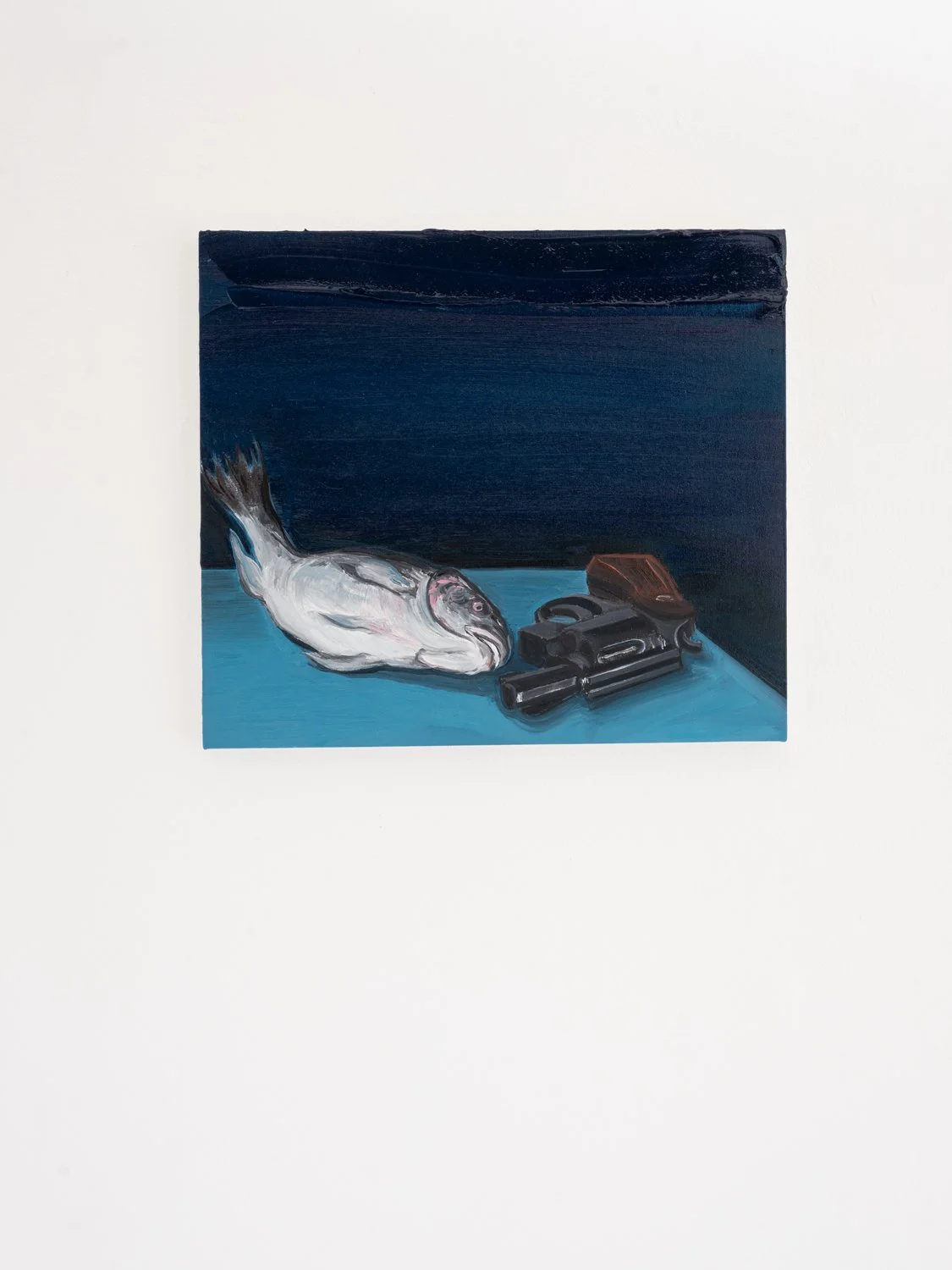
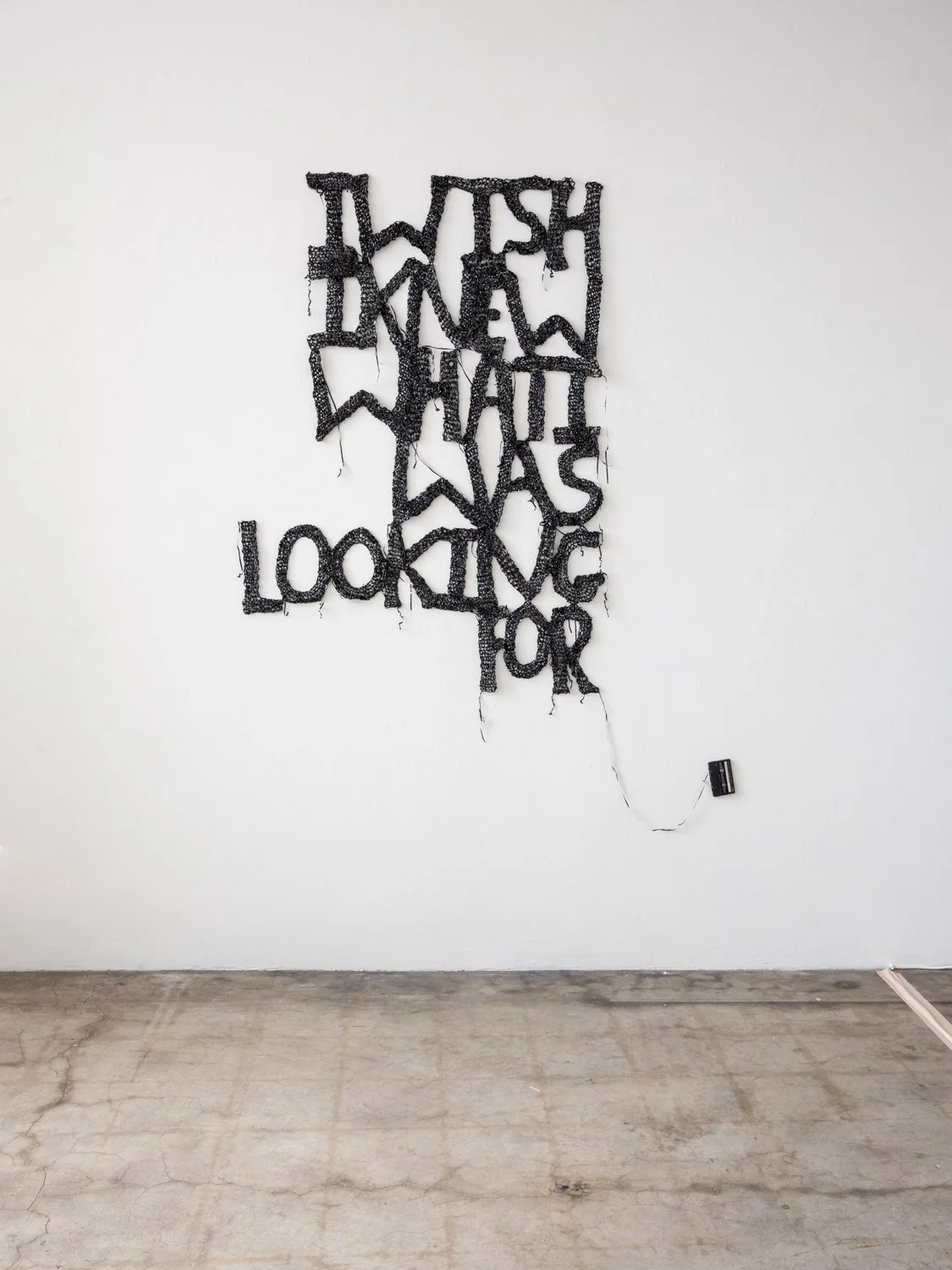
You might be happy to discover that none of the works presented in Eral Requiem | NOTHING STOPS THIS TRAIN address or allude to the aforementioned topics that populate headlines in our recent news cycles. Instead, the selected works depict images and ideas associated with transience, death, and futility as they relate to events, objects, and technologies from the not-so-distant past. In some cases, the works serve as reflections of our collective experiences, and in others, represent the memories and personal histories of their respective creators. Whether that be a cassette tape, a song lyric, or the practice of crochet as demonstrated in the found-object sculpture of Nicola Vruwink, or the recurring motif of a single gun paired with a mundane item in the paintings of Salomon Huerta. These objects and images allude to an anecdote or recollection of an ephemeral moment in time. And not unlike the worn-down cassette tape or scratched-up compact disc still hiding in one’s closet, a laptop, smartphone, and even your AI chatbot will, sooner or later, become a thing of the past. As Dutch still-life painting served as Memento mori (a reminder of death) or Vanitas (a symbol of transience & futility), the sculptural objects and paintings in this exhibition will hopefully provoke visitors to confront notions of change and impermanence as related to their lived experiences as a means of acknowledging the fears and anxieties surrounding what the future has in store while we learn to embrace it, or otherwise, brace ourselves for it.
ARTIST BIOGRAPHIES
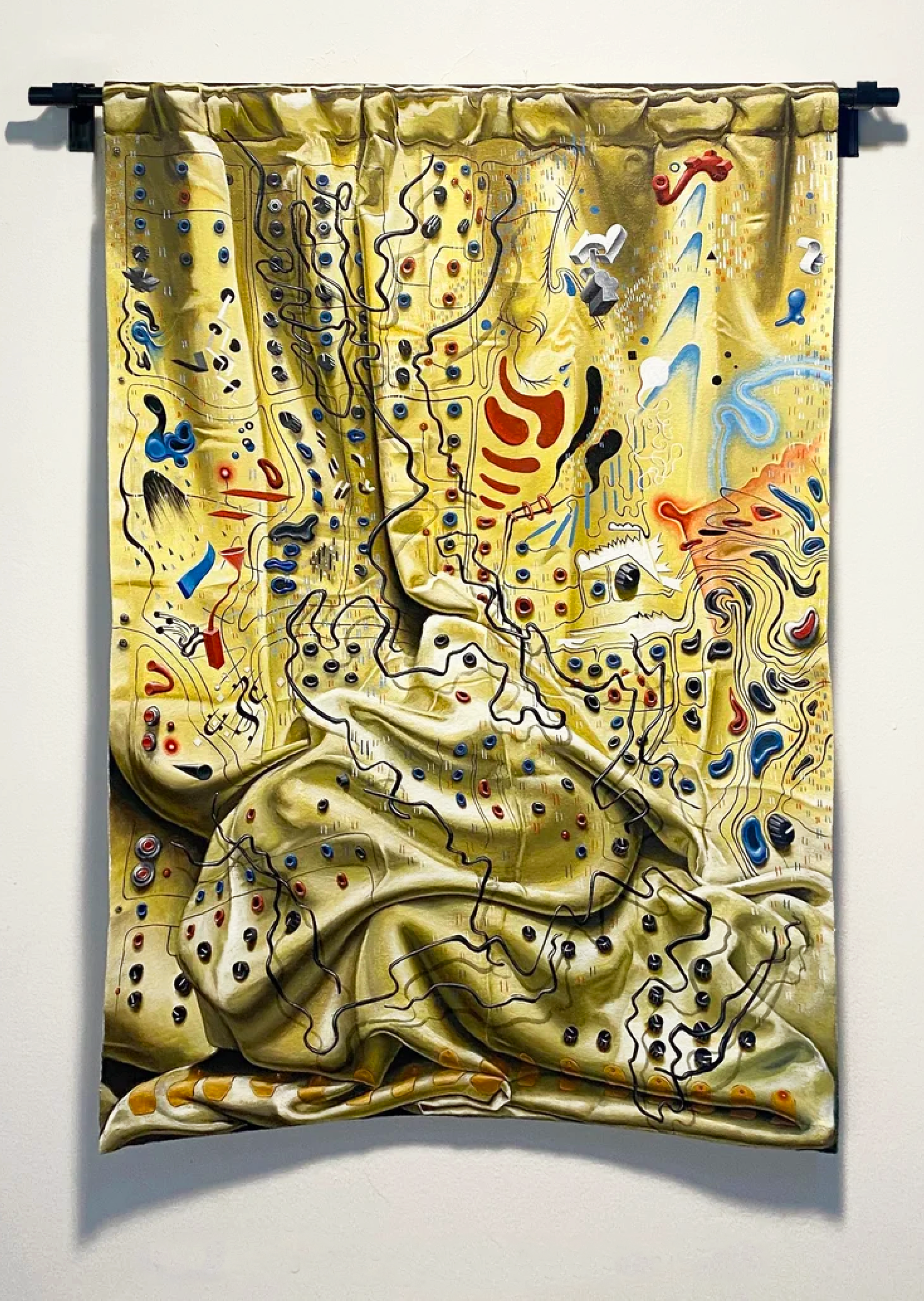
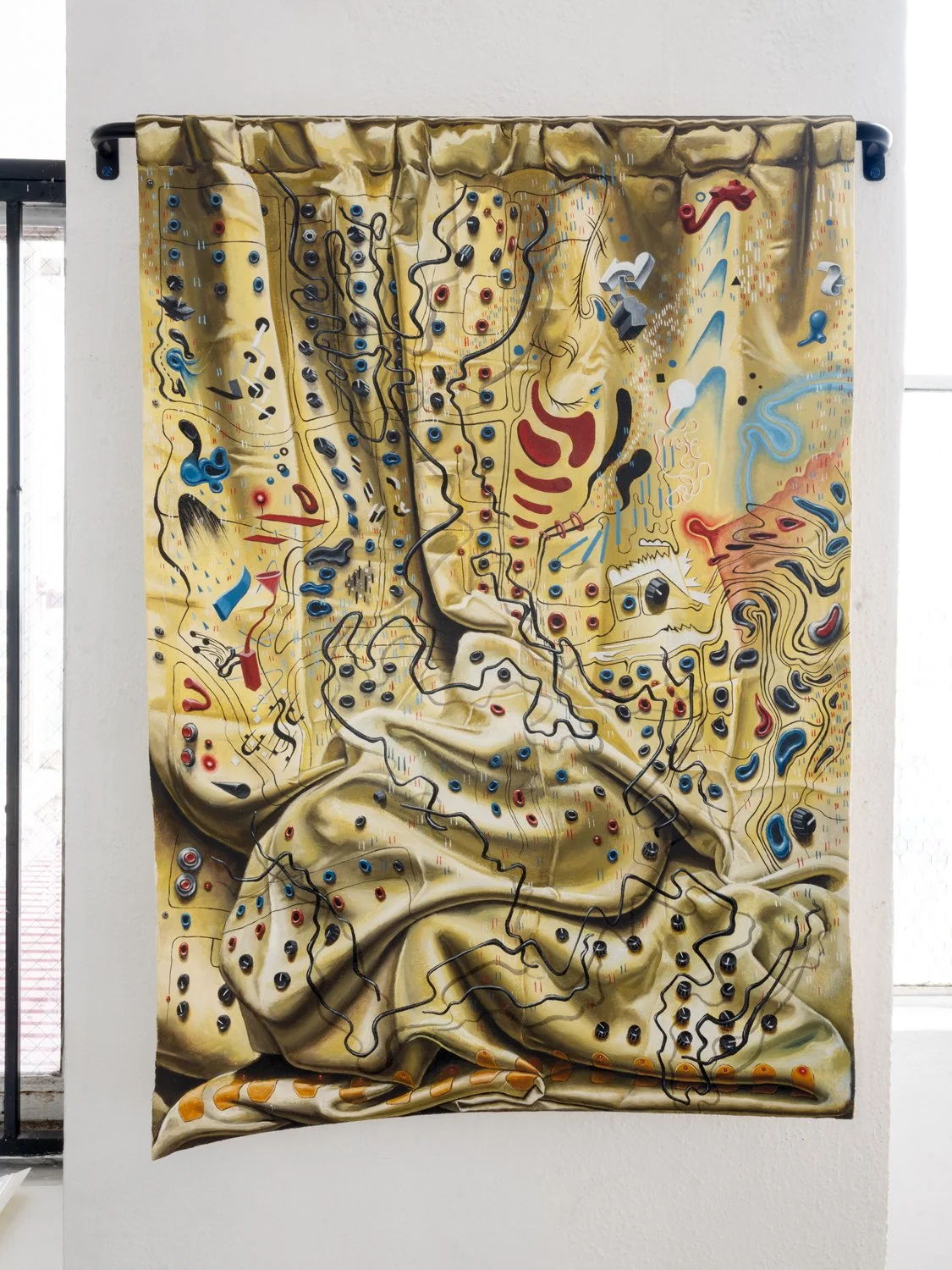
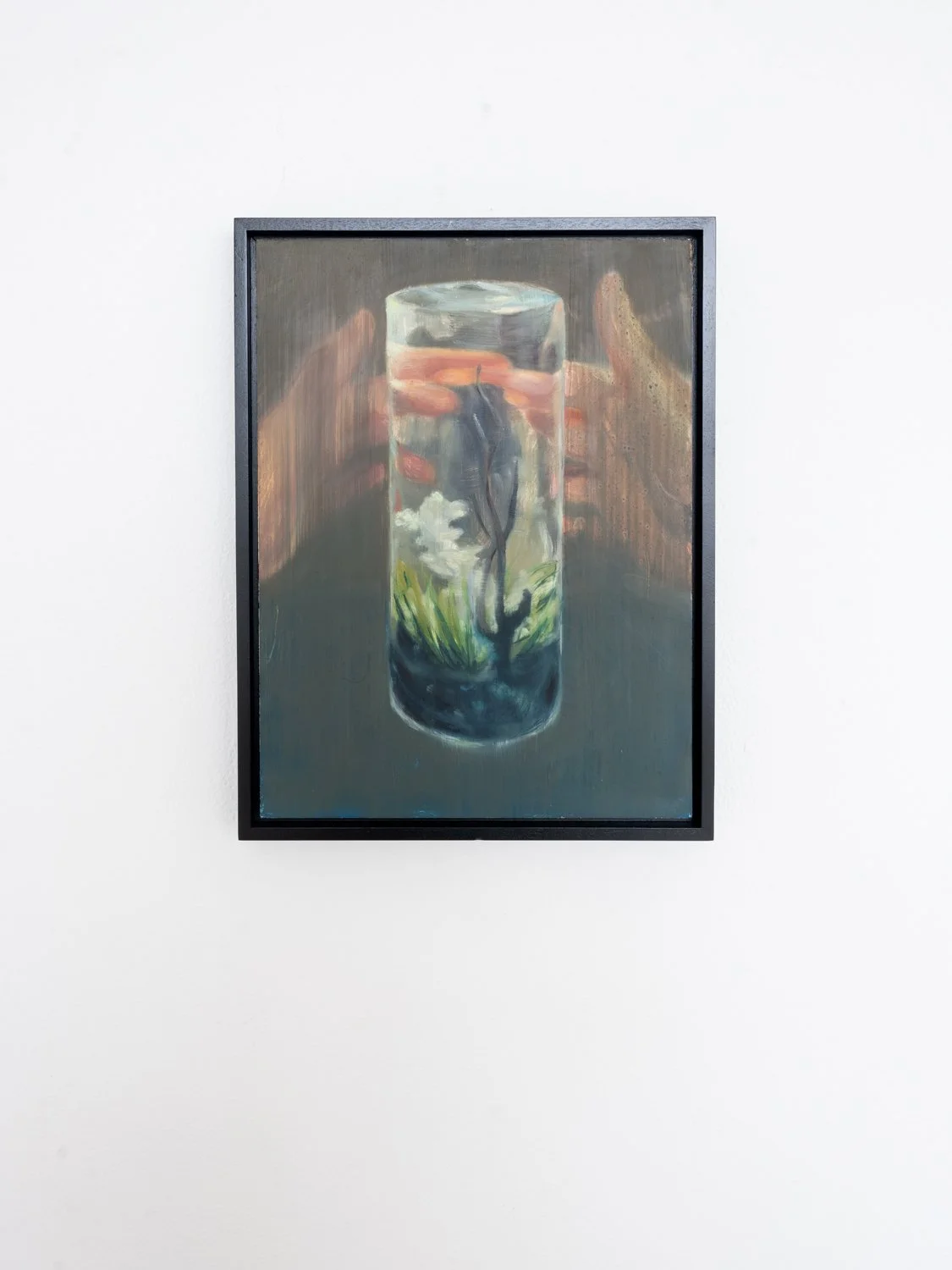
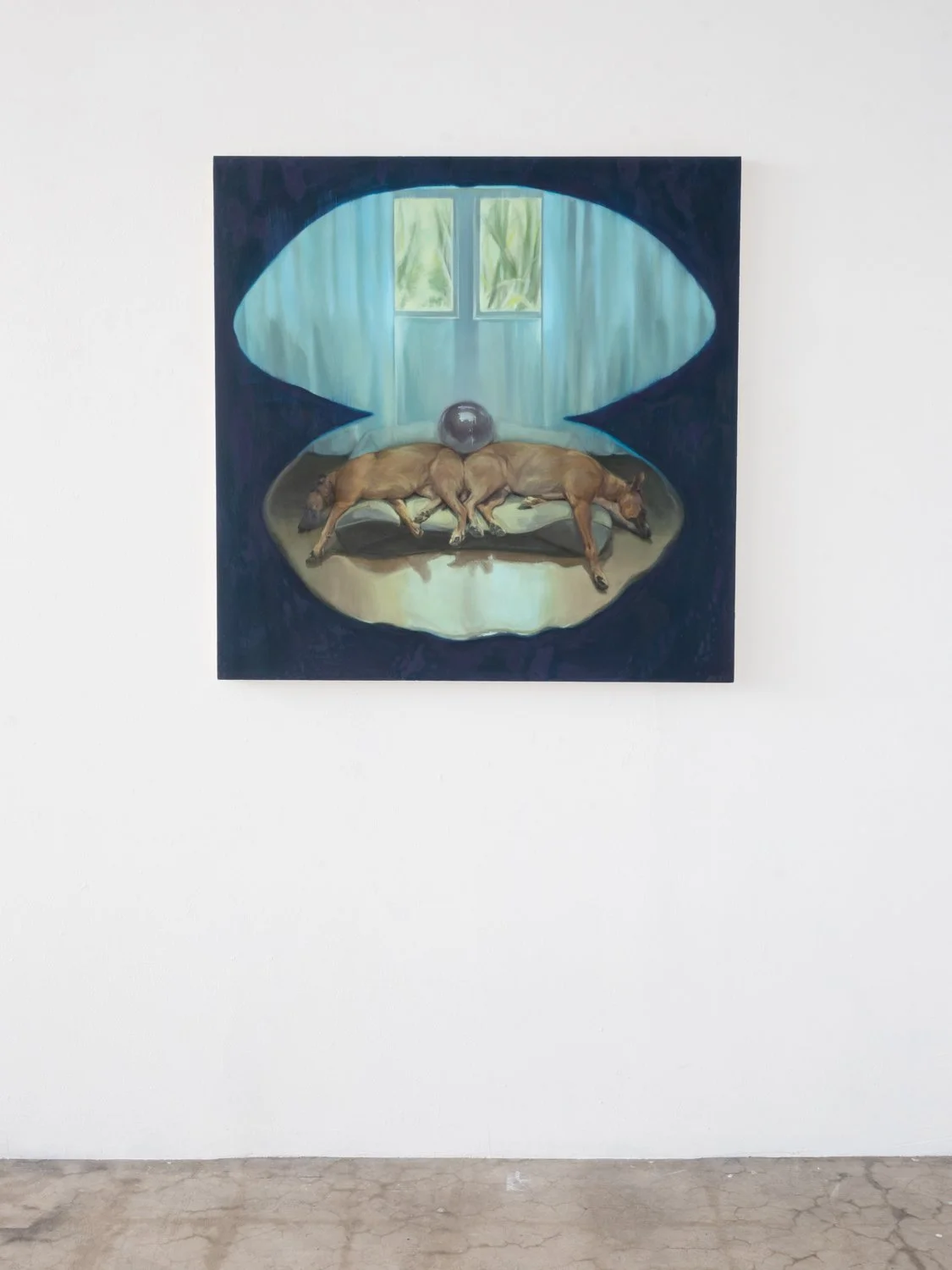
Brian Cooper: Born in San Francisco, Brian Cooper is an artist and musician whose work delves into the interplay between consciousness and the material world. Many of his paintings, drawings, and sculptures employ trompe l’oeil techniques that playfully challenge perceptions of reality, offering a vivid exploration of the tensions between the mundane and desires for the transcendent. Cooper’s artistic vision is influenced by California’s legacy of psychedelia and surrealist humor. He is also drawn to the ethereal quality of Northern Renaissance painter Jan Van Eyck and his contemporaries.
His current paintings examine our contemporary, machine-like worldview by combining images of curtains and modular synthesizers. These works are about the limits of that perspective and hint at something more elusive and spiritual behind the scenes. They connect with ideas related to the Hindu concept of maya, suggesting time and space as illusory constructs that veil some sort of base reality.
Cooper’s work has been widely featured in publications such as Le Monde, Electronic Sound, Juxtapoz, Hi-Fructose, Booooooom, L.A. Weekly, and New American Paintings. His pieces reside in collections such as the West Collection (Philadelphia), Beth Rudin DeWoody Collection, Marriott Hotels Collection, and the collection of music producer Brian Brater. He has exhibited at venues such as White Columns, Tiger Strikes Asteroid, Praz-Delavallade, and Odd Ark, with shows spanning the United States, Berlin, Japan, the Netherlands, Mexico, and Colombia. Brian Cooper is a graduate of the San Francisco Art Institute (BFA) and the University of Southern California (MFA).
Salomon Huerta: Born in Tijuana, Mexico, in 1965, Salomón Huerta earned his BFA from Art Center College of Design in 1991 and his MFA from UCLA in 1998. His work has recently been the subject of solo exhibitions at Harper’s in New York and East Hampton (2022–2024), Louise Alexander Gallery in Porto Cervo, Italy (2019, 2021), California Lutheran University in Thousand Oaks, CA (2020), Gallery Vacancy/ltd los angeles, Shanghai (2019), and Museo de Arte Carrillo Gil, Mexico City (2018); among others. Over the course of his career, Huerta has participated in major group exhibitions including Home—So Different, So Appealing at the Los Angeles County Museum of Art (2017); Transactions: Contemporary Latin American and Latino Art at the Museum of Contemporary Art San Diego (2006); Retratos, El Museo del Barrio, New York, San Antonio Museum, San Antonio, and National Portrait Gallery, Washington, DC (2005-6); and the Whitney Biennial at the Whitney Museum of American Art, New York (2000). His work is held in the permanent collections of the Los Angeles County Museum of Art; Museum of Contemporary Art, Los Angeles; Museum of Contemporary Art, San Diego; Fisher Museum of Art, University of Southern California; and Whitney Museum of American Art, New York. Huerta lives and works in Los Angeles.
Megan Koth: Megan Koth is an artist currently based in Ventura, California. She received her Master of Fine Arts in 2020 from the University of California, Santa Barbara. She currently works as the graduate program manager and as a lecturer in the UCSB Department of Art. Her work resides in private collections throughout the United States, and has appeared in Voyage-Phoenix, Lum Artzine, LA Weekly, Hyperallergic, and the Phoenix New Times.
Through a queer, feminist lens, Koth addresses the often fraught relationship that can exist between the topography and interiority of the body. Viral internet imagery, contemporary makeup trends, and the traditions of painting and self-portraiture converge to address themes of body horror, obsessive self-evaluation and maintenance, as well as the liminal space of self-care. Drawing from her own experiences with chronic illness and medical trauma, Koth interrogates how personal grooming in the form of skincare and beauty rituals can be a crucial exterior reaction to interior anxieties towards exerting, and sometimes losing, control over one’s body.
Macha Suzuki: Macha Suzuki (born 1979 in Tokyo, Japan) immigrated to Los Angeles in 1988. He has an MFA from Claremont Graduate University in sculpture and a BA in studio art with an emphasis in painting and photography from Azusa Pacific University. For the past two decades, Suzuki has exhibited his work in museums and galleries, nationally and internationally. Solo exhibitions include Sam Lee Gallery, Wignall Museum, Vincent Price Art Museum, Laguna Art Museum, Gallery Lara Tokyo, Kravets/Wehby Gallery in NYC, Cypress College, and Biola University. Suzuki has taught art and design at various institutions since 2005, and he is currently Clinical Associate Professor at Loyola Marymount University. He lives and works in Los Angeles, CA.
Nicola Vruwink: Nicola Vruwink is a multimedia artist, designer, and educator who lives in Los Angeles and maintains a studio in Landers, CA, where she is the founder and curator of Goat Gallery. Her work has been featured in exhibitions at the Palm Springs Museum of Art, San Jose Institute of Contemporary Art, and Armory Center for the Arts in Pasadena, with solo exhibitions presented by the Lancaster Museum, Seattle Art Museum, and Riverside Art Museum.
Vruwink’s works are held in the collections of the Palm Springs Art Museum and Seattle Art Museum, among others. Reviews of her work have been featured in Artforum, the Los Angeles Times, Huffington Post, Seattle Post-Intelligencer, and Angeleno Magazine. She received an MFA from the University of Washington in Seattle and is currently a full-time faculty member in the Graphic Design program at Santa Monica College. She previously served as assistant faculty at ArtCenter College of Design in Pasadena, CA, where she taught ceramics.
CURATOR BIOGRAPHY
Born in Tokyo and raised in Los Angeles, Ichiro Irie is a visual artist, curator, and Creative Director of QiPO Fair. Irie received his B.A. from the University of California, Santa Barbara, and his M.F.A. from Claremont Graduate University. After completing his MFA, Irie traveled to Mexico City on a Fulbright Fellowship. During this period, he founded and edited the contemporary art publication RiM (2002-2007). As an artist, Irie has exhibited his work in galleries and museums internationally. Solo shows include DENK gallery, Los Angeles; Yautepec Gallery, Mexico City; and eitoeiko gallery, Tokyo. Group exhibitions include To Travel With Glasses at Aomori Museum of Art, Japan; the Pacific Standard Time initiative, Transpacific Borderlands at Japanese American National Museum, Los Angeles; and Revision Glocal Review at CECUT, Tijuana, MX.
As a curator, Irie has organized exhibitions at venues such as University of La Verne, Harris Gallery, PØST gallery, Los Angeles; Torrance Art Museum, Art & Idea, Mexico City; MUCA Roma, Mexico City, 18th Street Arts Center, Santa Monica, CA; Titanik Galleria, Turku, Finland; Campbell Projects, London; and Tiger Strikes Asteroid, NYC. Since 2019, Irie has organized QiPO Fair with partner Laura Resendiz. QiPO Fair is an annual art event held in Mexico City that focuses on artist-run initiatives from around the world. He is also the founding director of JAUS art space. His efforts as curator and art promoter have been featured in publications such as Supermarket Magazine, Art Forum, LA Weekly, Hyperallergic, Artillery, and Los Angeles Times. Irie currently teaches at Santa Monica College, Oxnard College, and Ryman Arts.
photos by Christine Atkinson